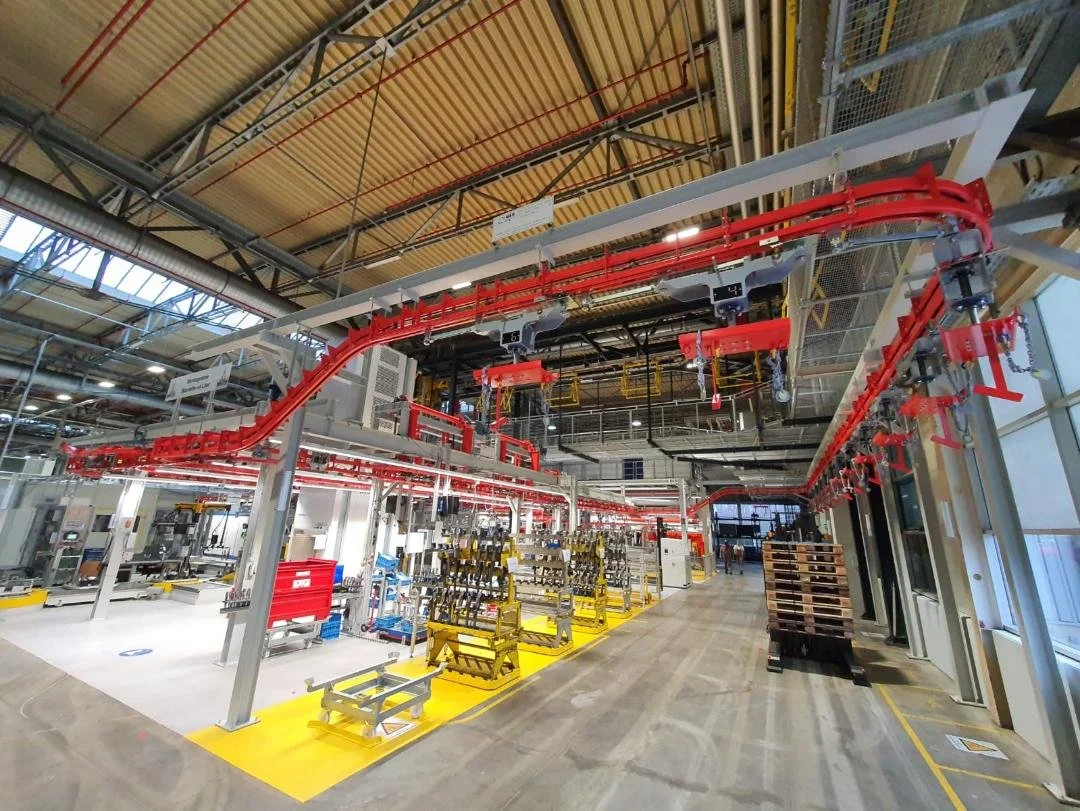
Power & Free Systems
Maximum Performance. Fully Automated. Adaptable.
Flexible and customizable Power & Free systems
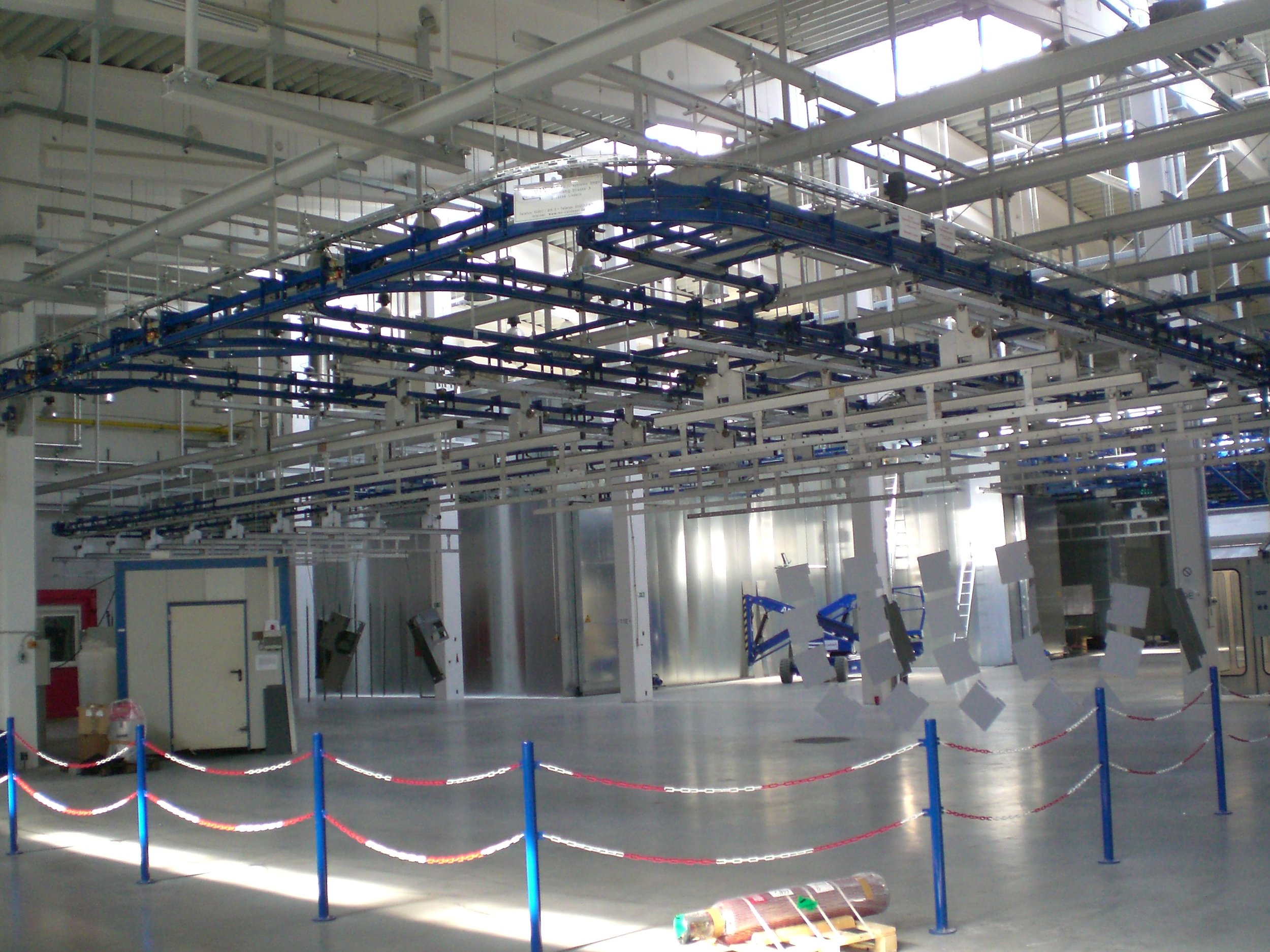
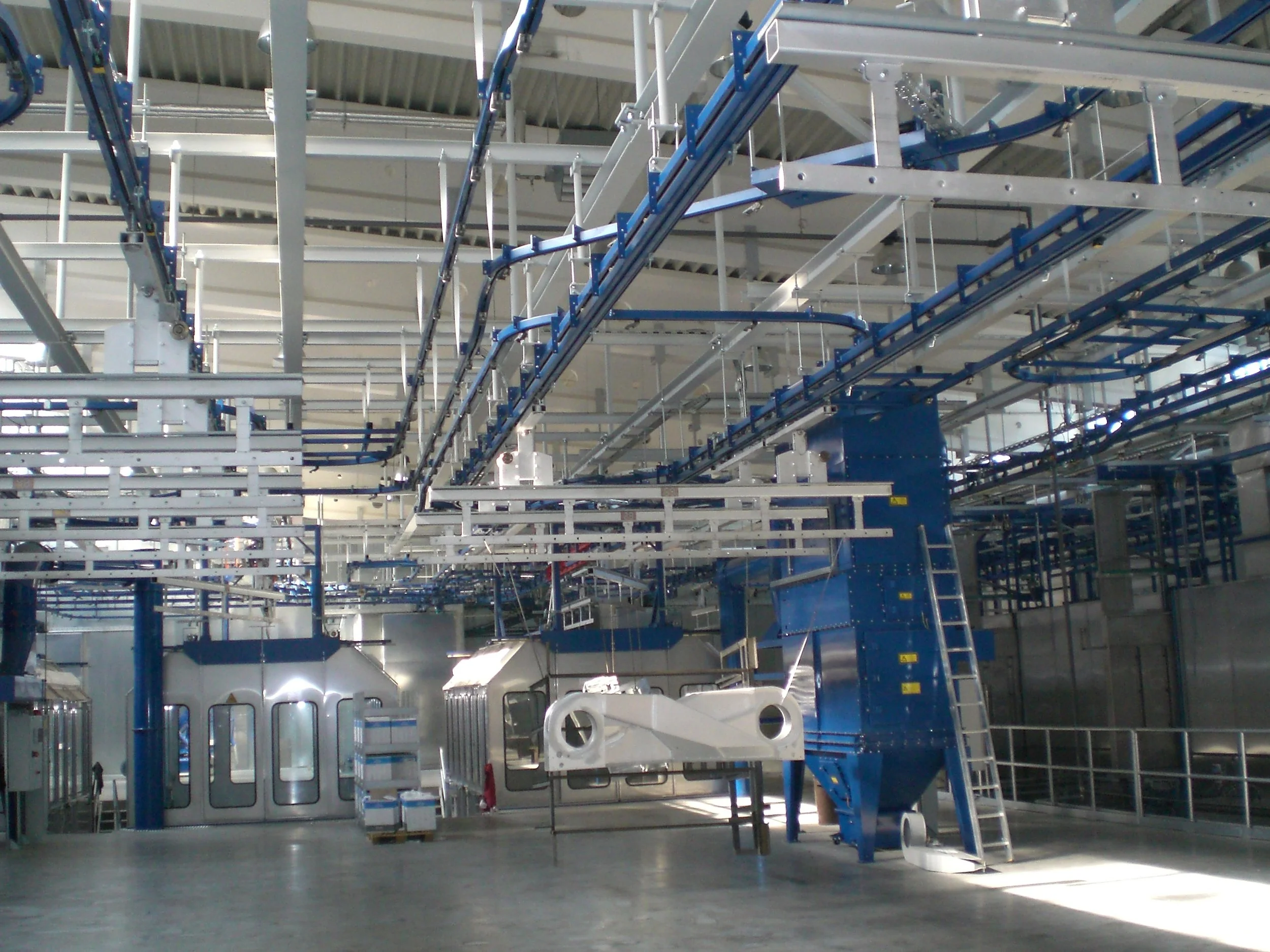
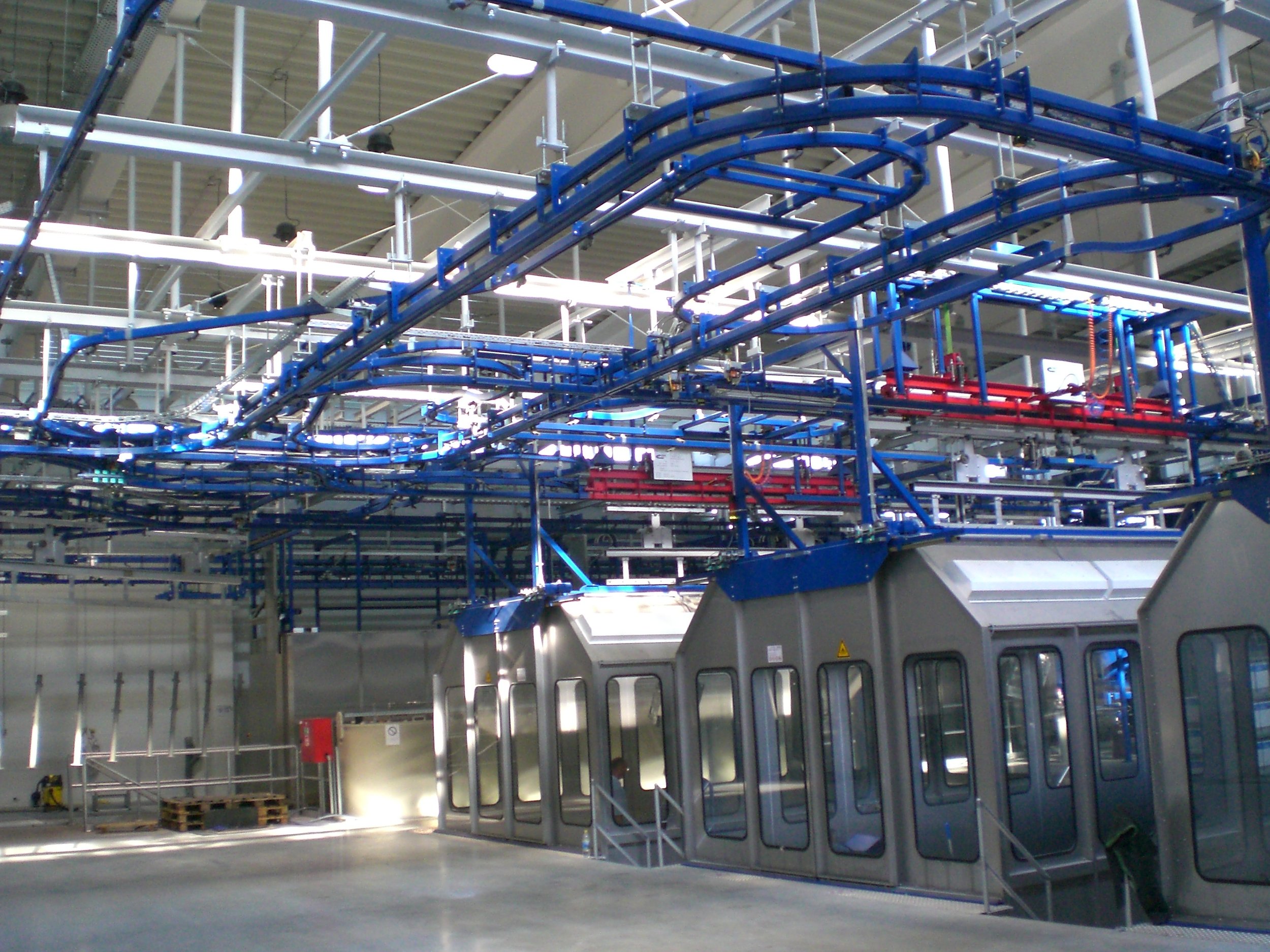
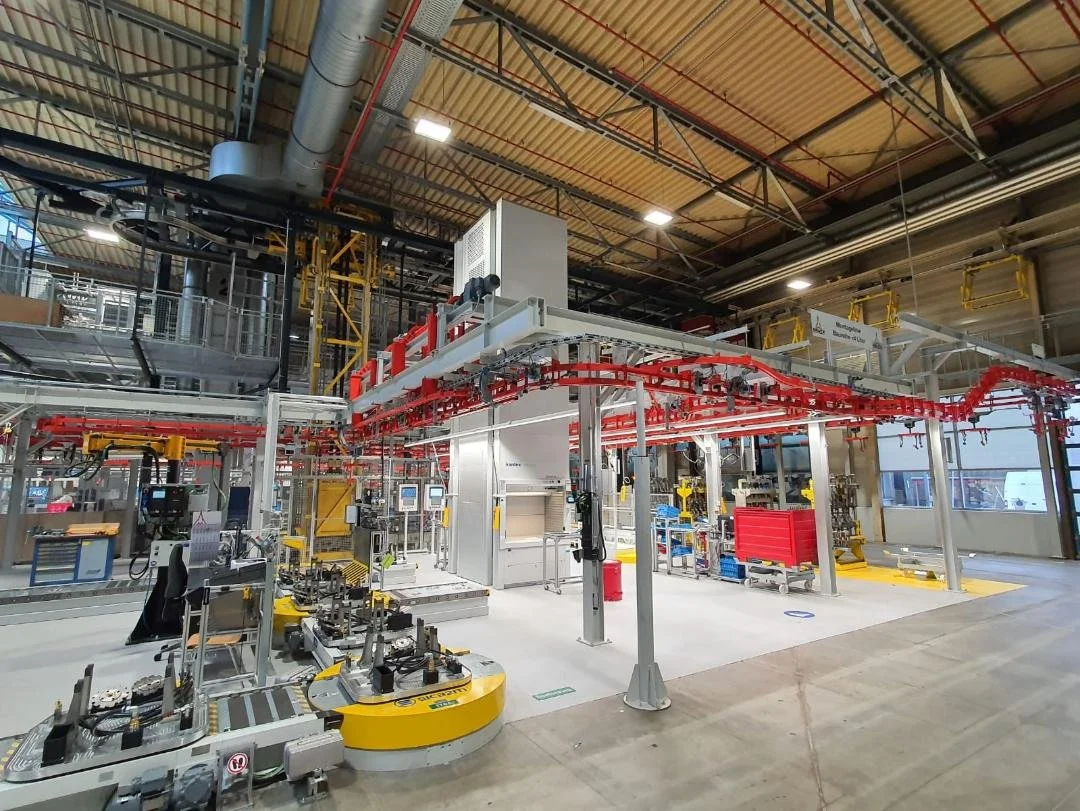
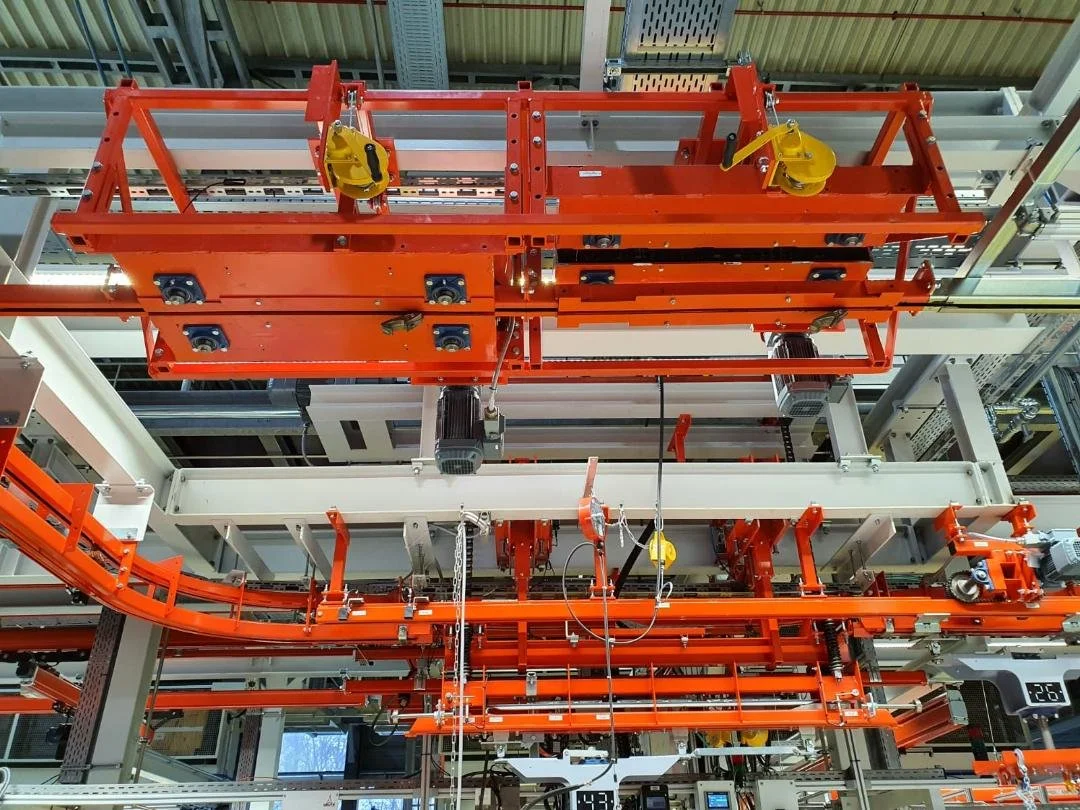
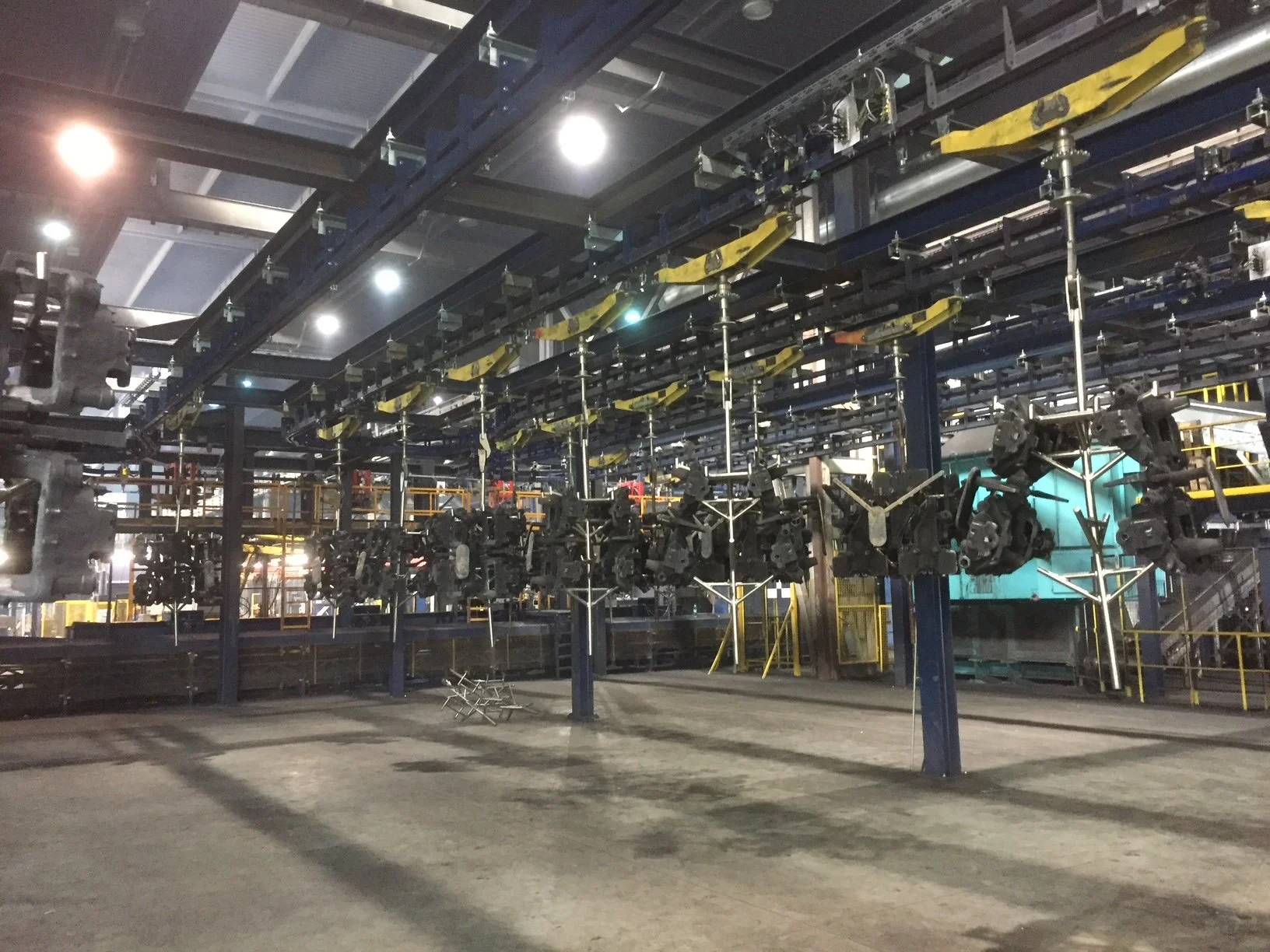
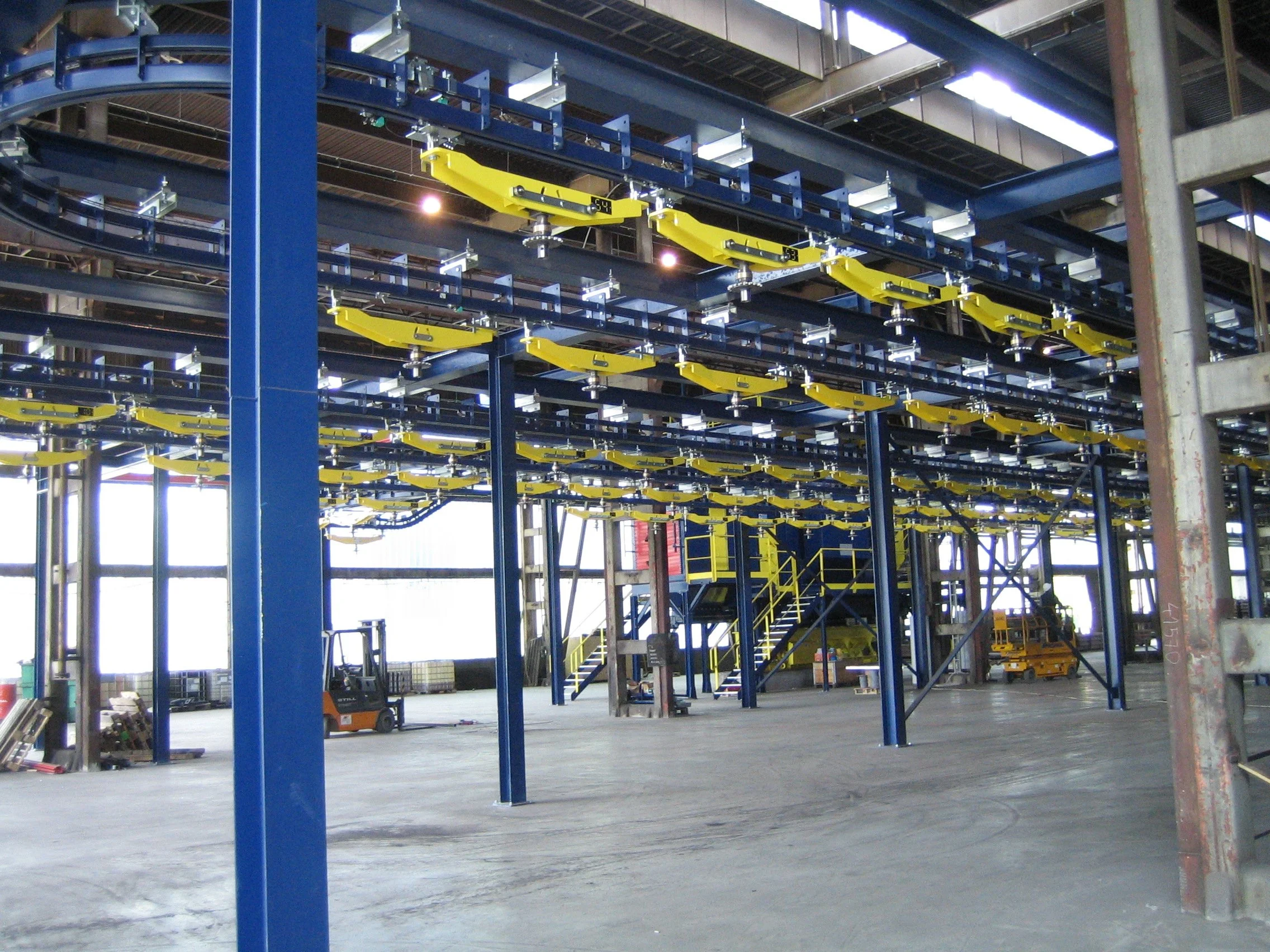
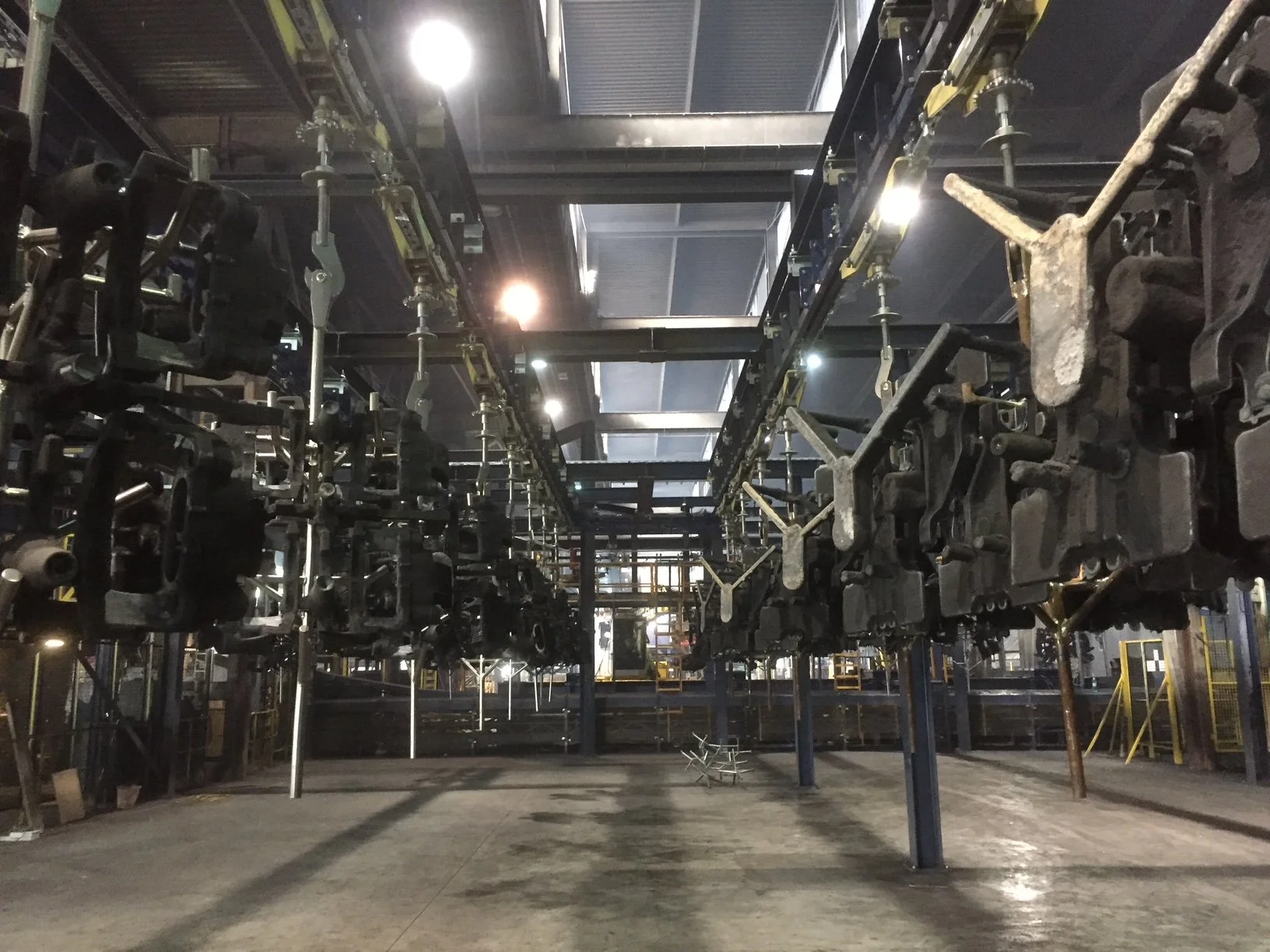
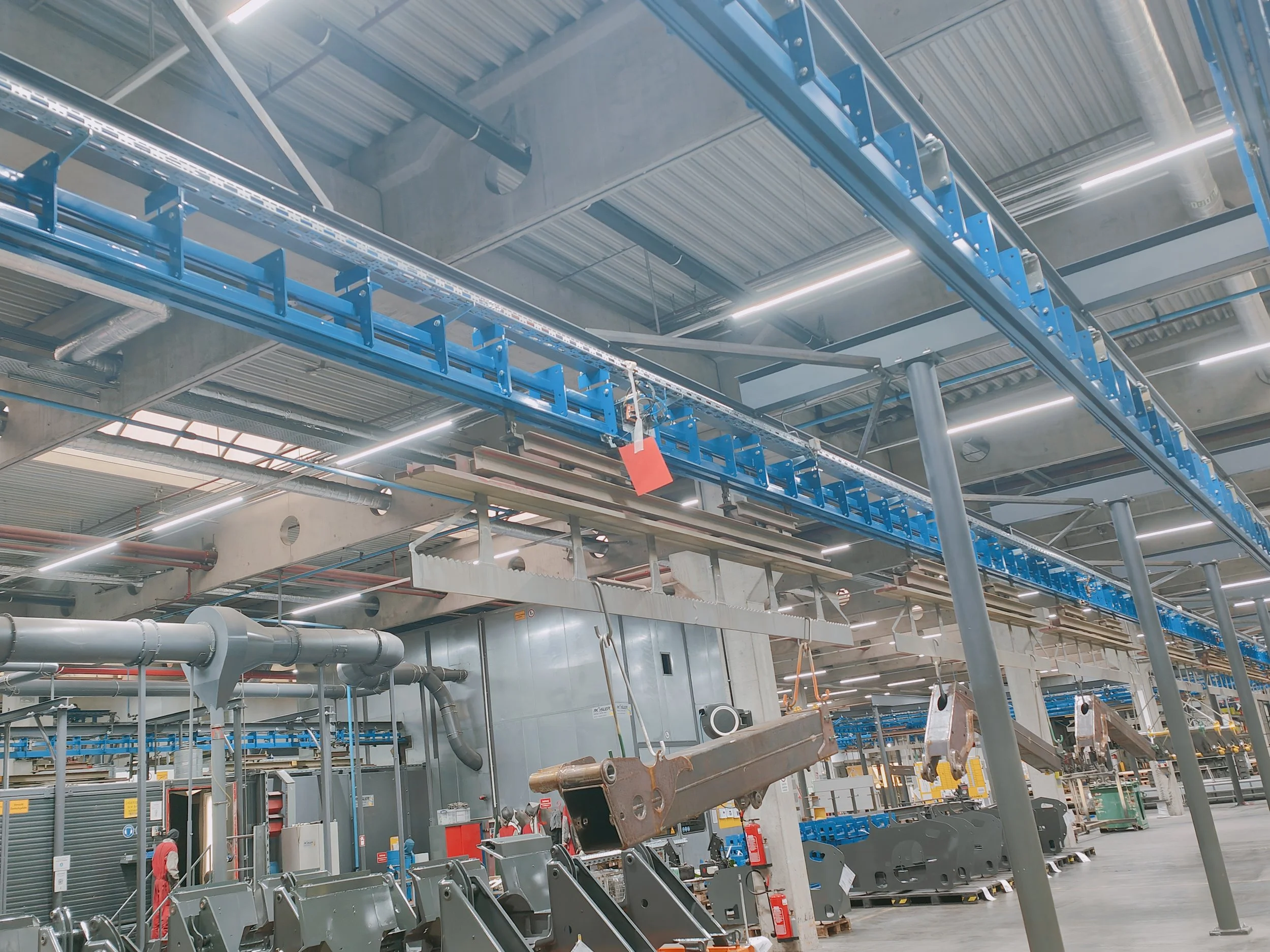
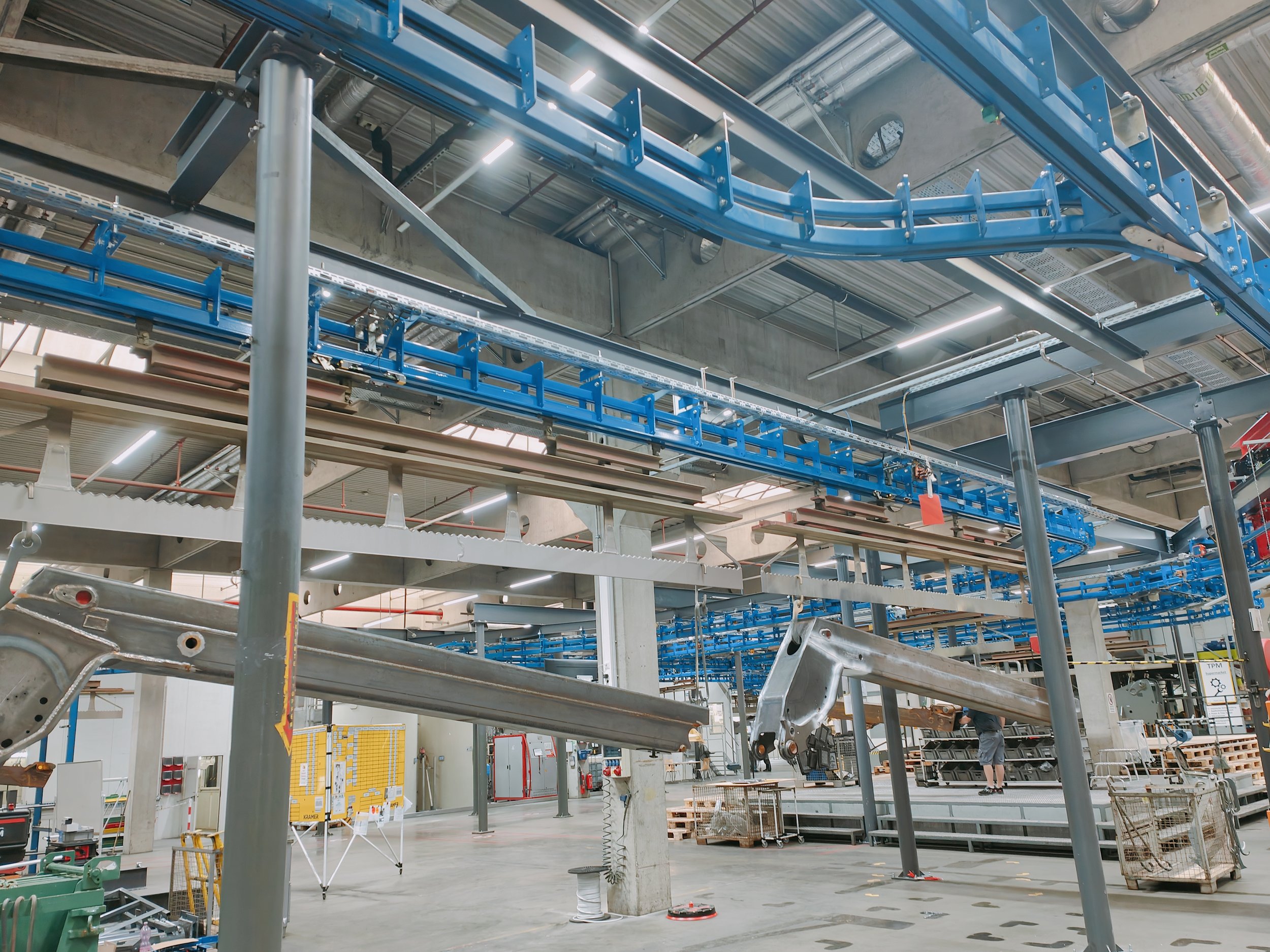
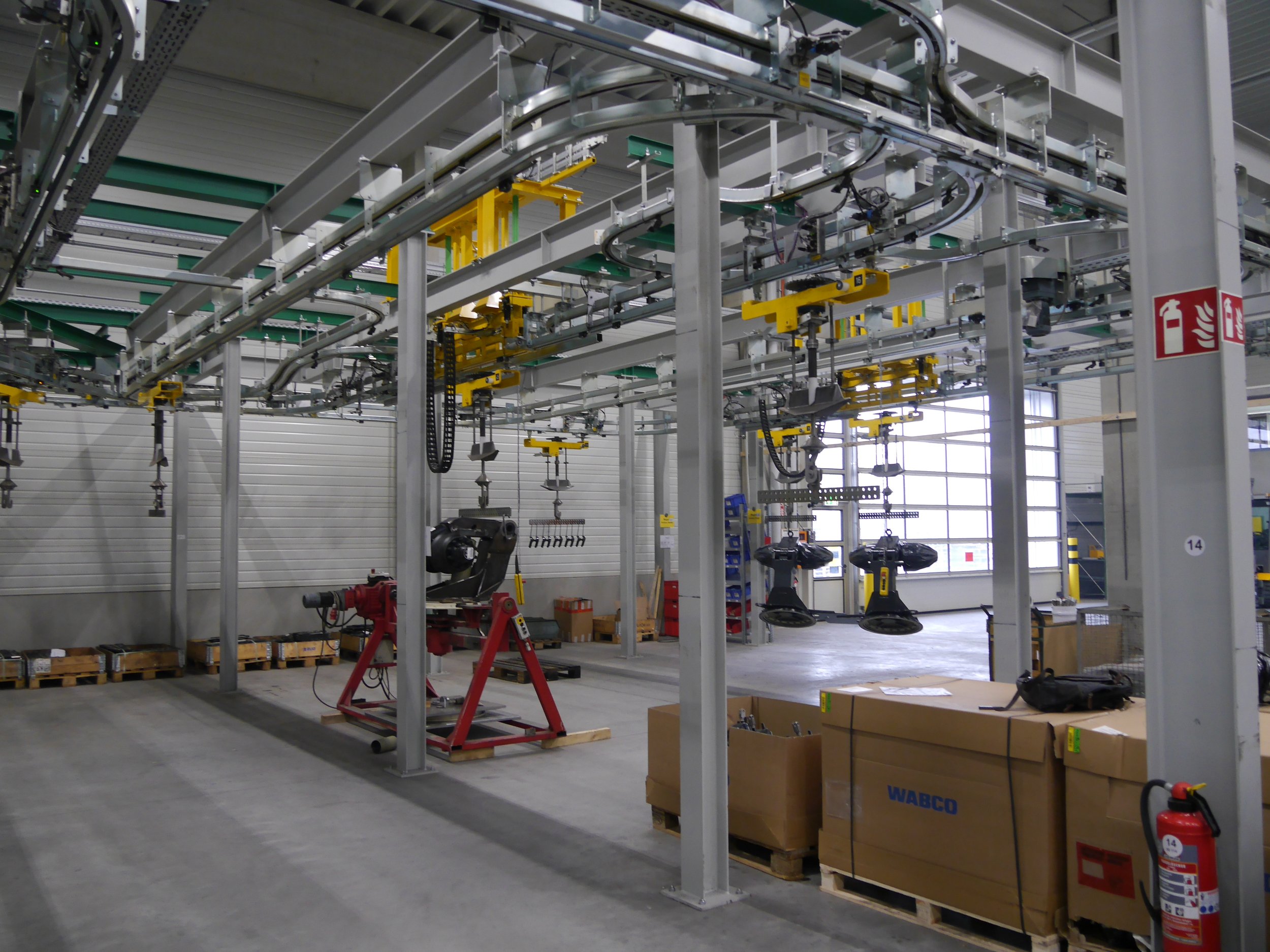
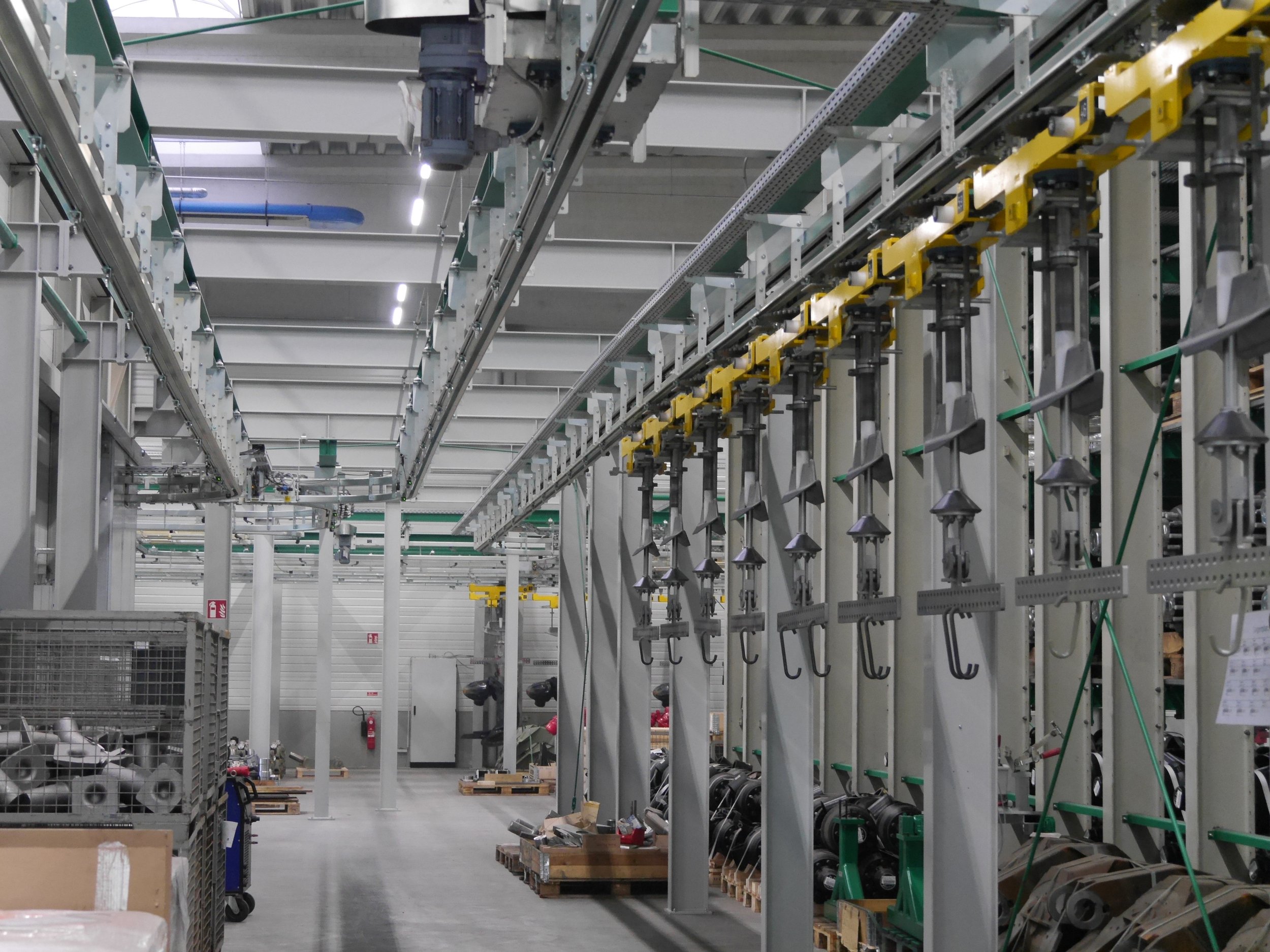
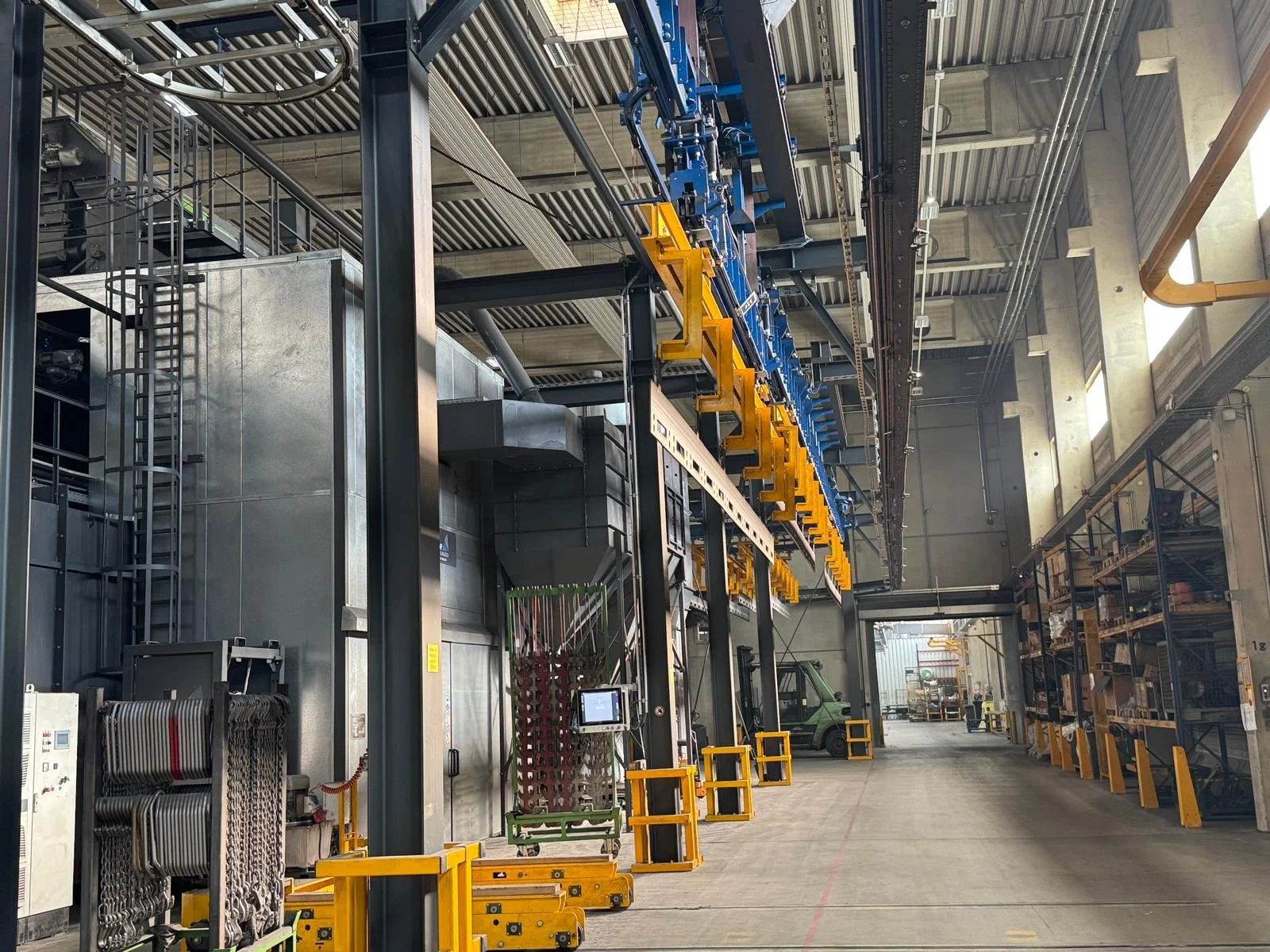
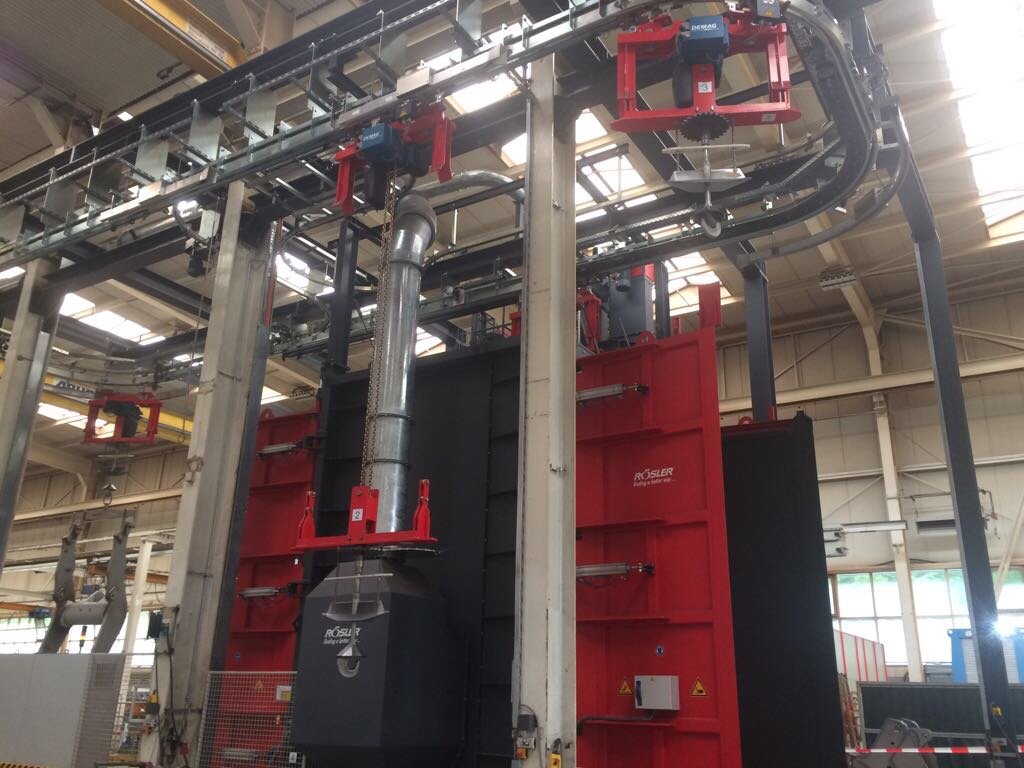
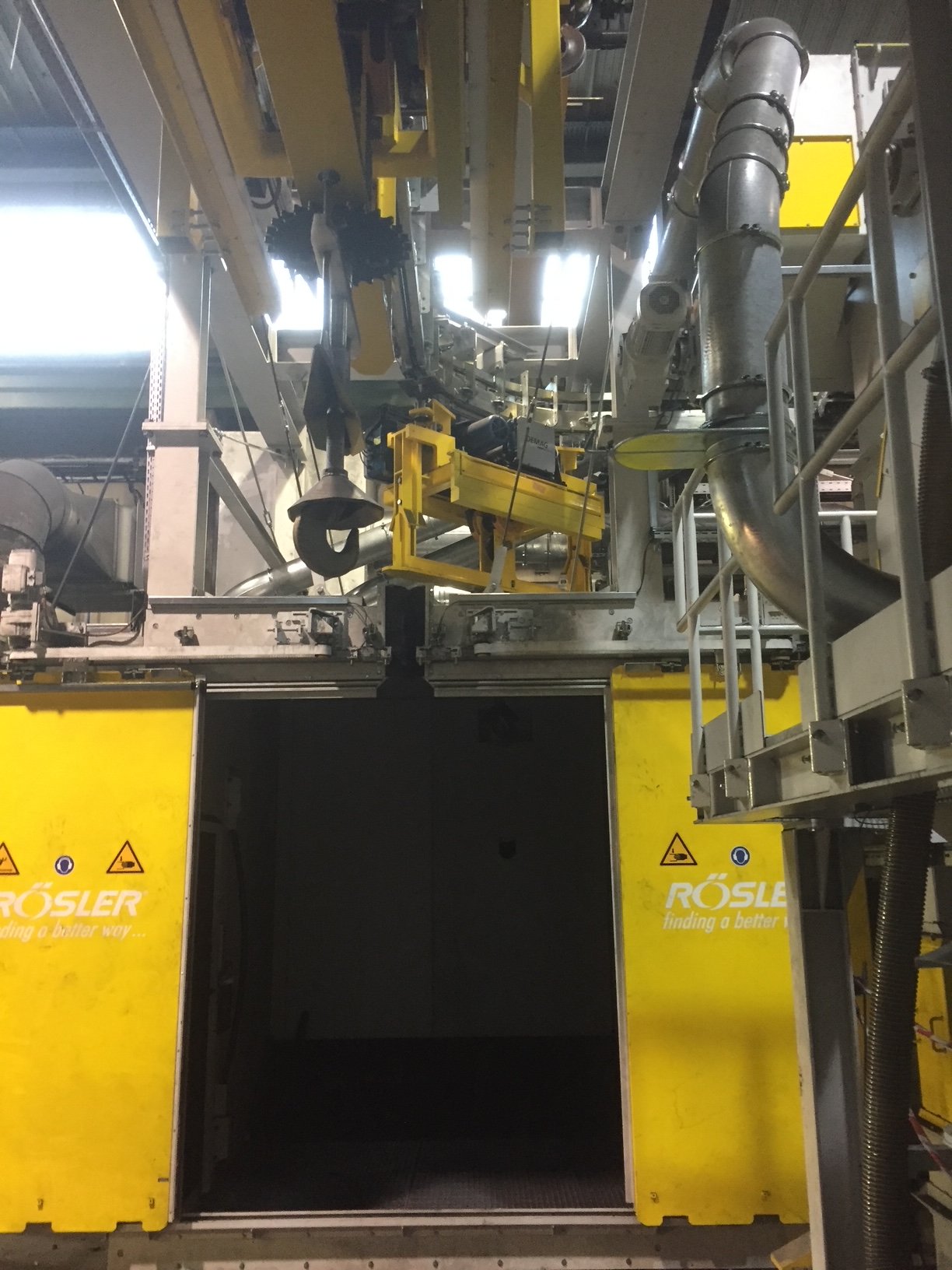
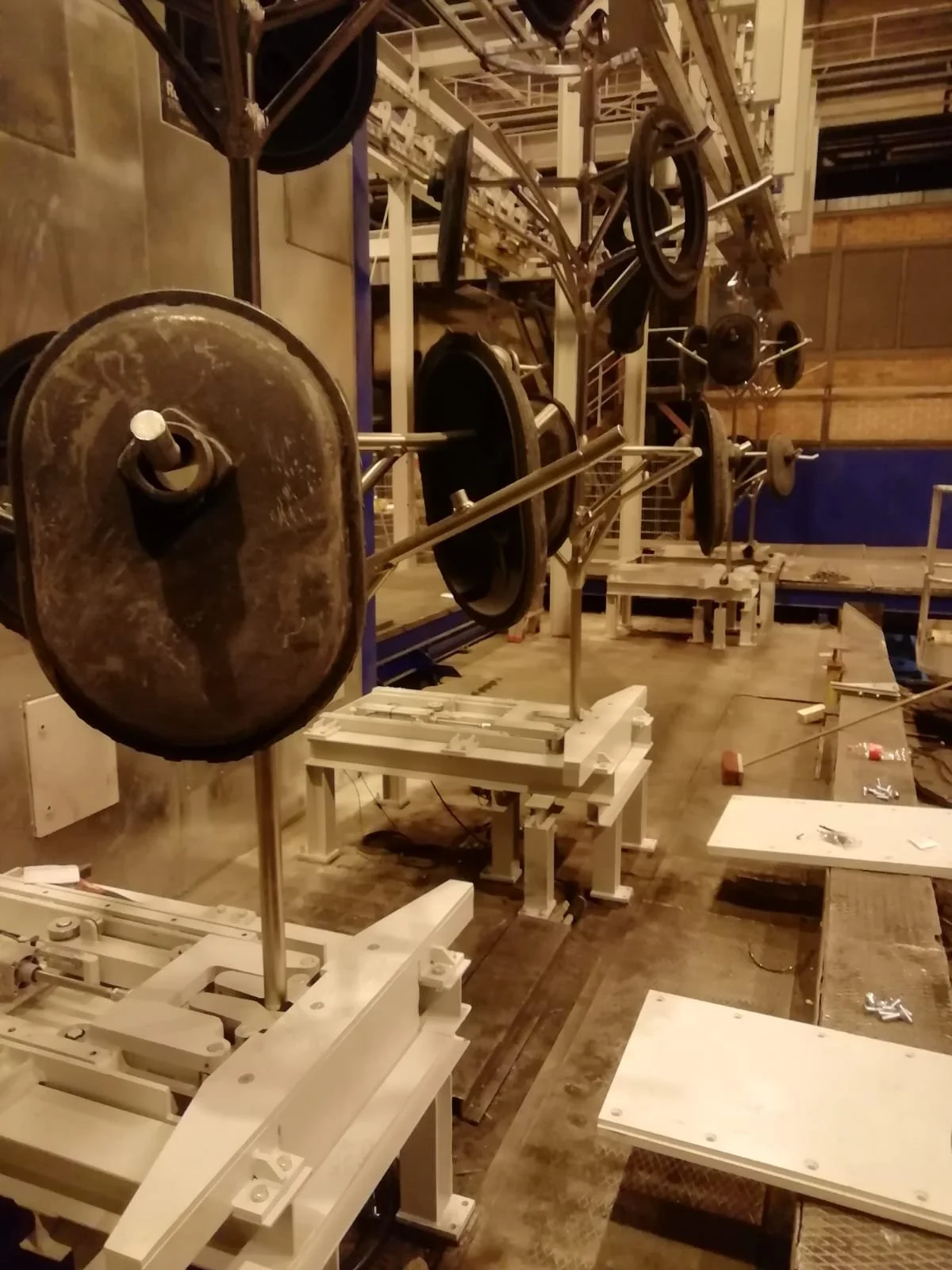
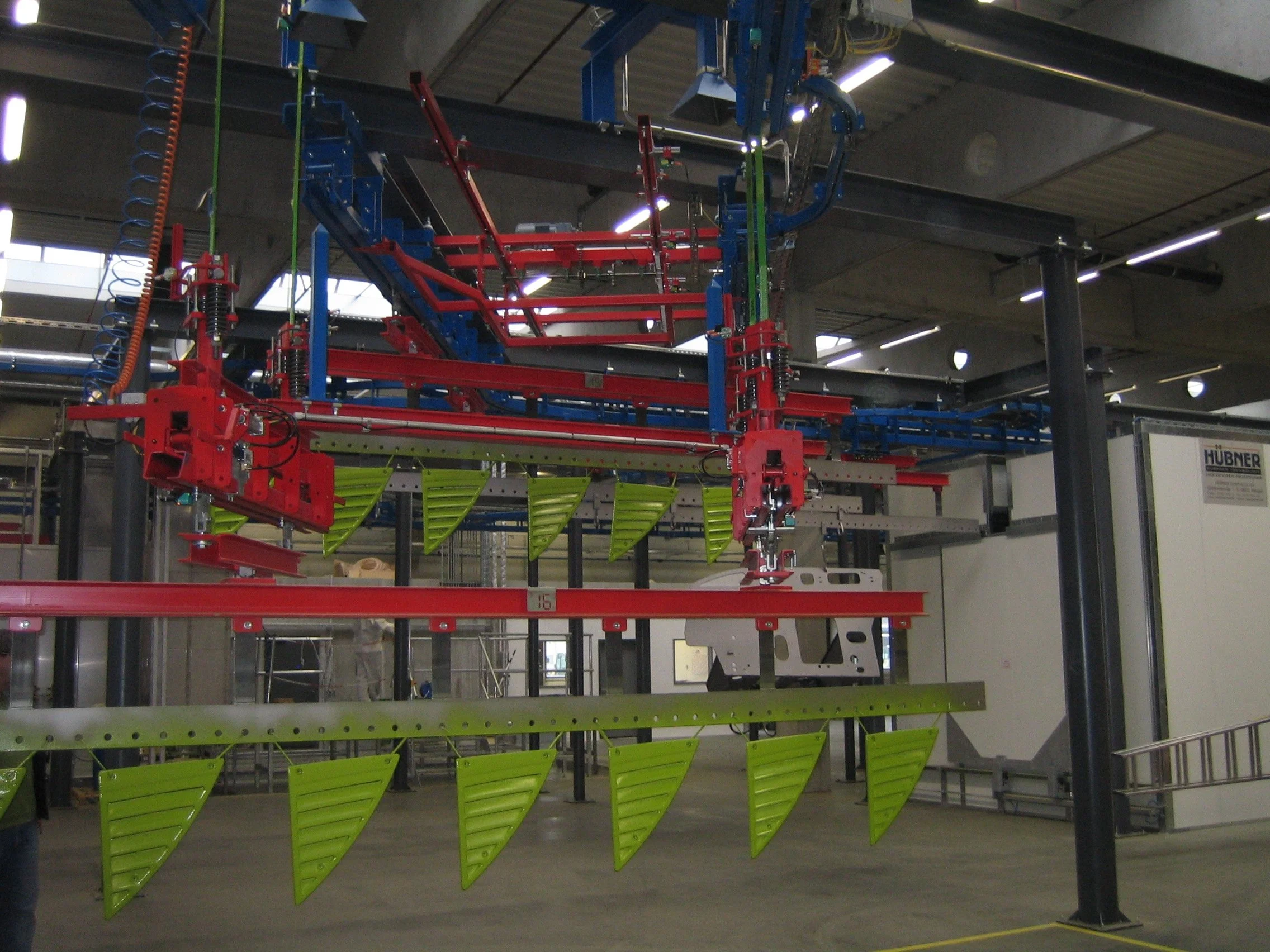
Our Power & Free systems enable independent, cycle- and position-independent transport of workpieces. They are ideal for complex manufacturing processes, variant production, or parallel production lines. These systems feature numerous components that allow for a three-dimensional track layout and are combinable. Their modular design facilitates easy integration into existing facilities.
This enables the connection of different system circuits, such as work and speed zones. Consequently, even with continuous conveying within a single system circuit, material flow with freely selectable cycle times is achieved.
For heavy-duty applications with load capacities ranging from 500 to 13,000 kg, we offer high-performance system solutions for manual or fully automated operation. Designed to meet the most demanding requirements in production and intralogistics, our systems combine durability with intelligent control technology.
Extensive expansion options allow the system to be precisely tailored to your processes. The result: maximum stability, seamless integration into complex manufacturing processes, and maximum process control – even under extreme loads.
System Overview
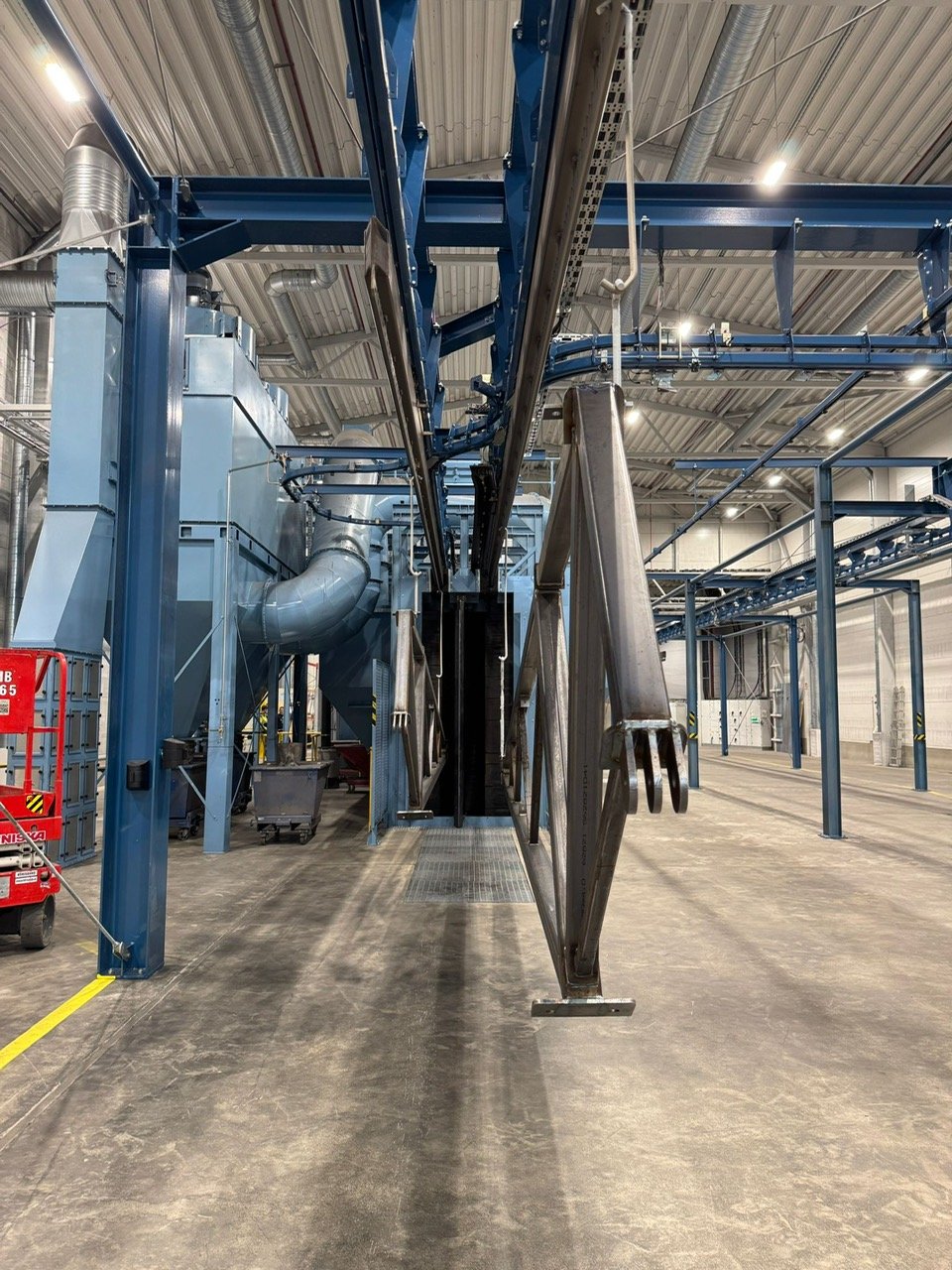
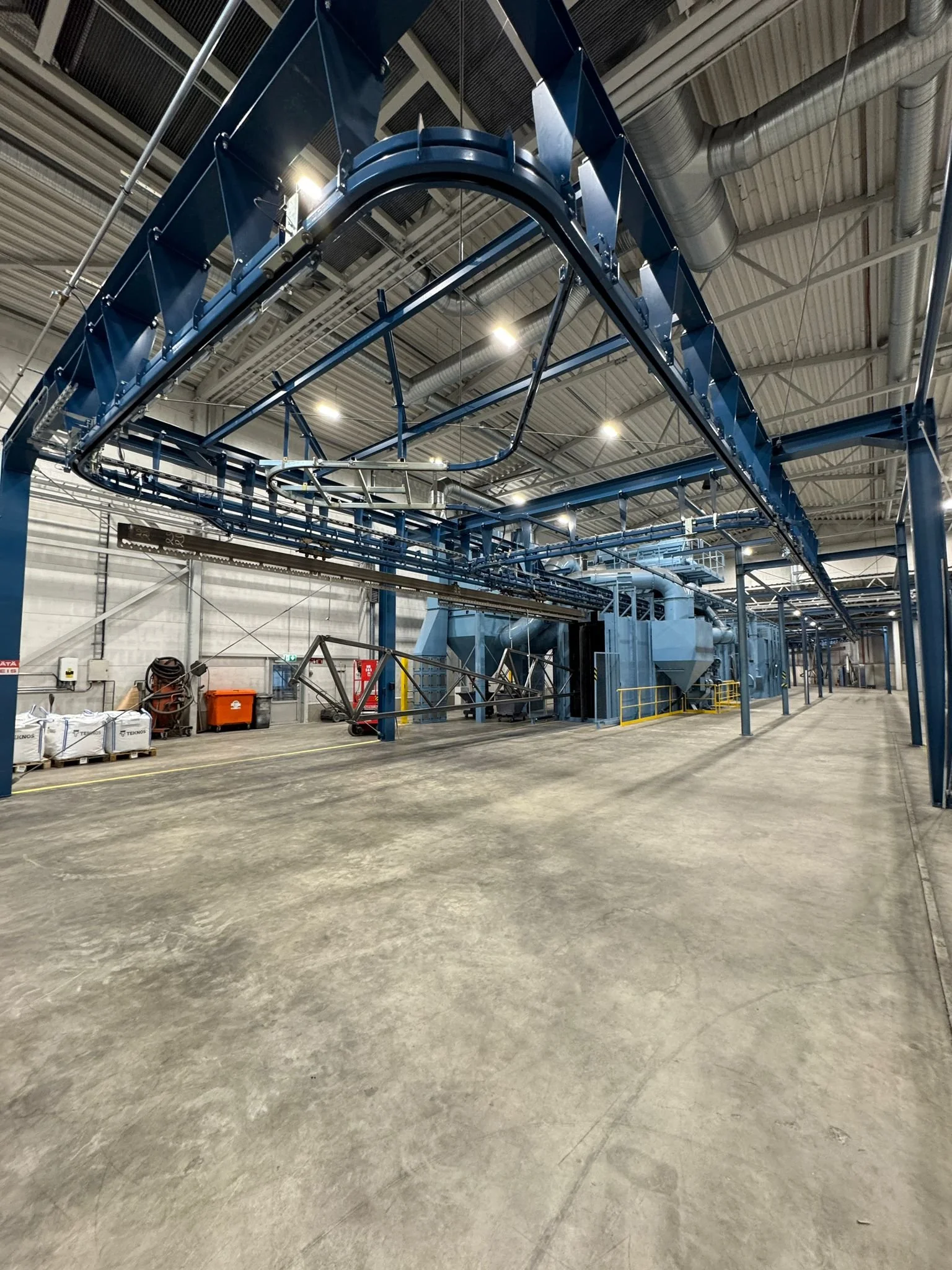
A Power & Free system is a combined, partially automated conveyor technology system type, consisting of a driven main track ('Power') and a co-moving load-carrying track ('Free').
These systems enable flexible, accumulation-capable, and individually controllable transport of loads.
- Painting Systems
- Assembly and Production Lines
- Intralogistics and Transport Routes
- Buffer and Storage Areas
- Material handling systems with variable cycle times
System Components
- Driven power track sections
- Free-running track section for trolleys (Free-Track)
- Carriers and stoppers (decoupling devices)
- Accumulation, lifting, and stopper elements
- Switches and distribution systems
- Load handling attachments such as hooks, traverses, or product carriers
- Control and safety technology.
System Functionality
The Power-Track is driven continuously or intermittently. The Free-Track, carrying the load carriers, is connected to the Power-Track via coupling mechanisms.
- Carrying: The carrier engages the trolley or transport unit and conveys it.
- Decoupling / Accumulating: Stoppers or decouplers disengage the trolley from the drive. The transport unit halts, while the Power-Track continues its operation.
- Switching and Distribution Functions: Transport trolleys can be automatically directed into side lines, buffers, or alternative routes.
- Lifting and Lowering: Depending on the system, this is achieved via lift units, lift/lower stations, or lifting modules.
System Advantages
- Parallel operation of multiple transport trolleys
- Buffering and asynchronous operation
- Individual process times per station
- Automatic or semi-automatic control
- Targeted stopping at defined stop points
Automatic Operation
The material flow is entirely managed by the system control.
- Automatic engagement and decoupling
- Automatic diverting
- Indexed and accumulable operation
- Automatic lifting and lowering processes, where applicable
- Process monitoring via sensor technology
Manual Operation / Interventions
Manual operating modes are utilized for:
- Maintenance and servicing
- Cleaning operations
- Manual release of individual carriers
- Positioning for inspections
- Manual switchover of diverters, where provided
- Manual release or stopping of individual carriers
- Manual advancement in a de-energized state
Fault Operation
- Controlled shutdown of the system
- Troubleshooting by trained personnel in accordance with manufacturer specifications
- Manual movement or removal of carriers only after authorization and securing
Safety Instructions
Power & Free systems are safe installations when operated in accordance with their intended purpose. The following rules must be strictly adhered to:
- Access to hazardous areas is restricted to authorized personnel.
- Loads must not be manually touched or stabilized while the carrier is in motion.
- The load capacity of carriers and suspensions must not be exceeded.
- During manual intervention, the drive must be safely de-energized and secured against accidental re-engagement.
- No personnel are permitted under suspended loads.
- Diverter areas, stoppers, and drive zones must not be entered during operation.
- Loose objects, clothing, or body parts must not become entangled in the machinery.
- Malfunctions may only be rectified by qualified personnel.
Loading and Suspending the Load
- Ensure that the load carrier is freely accessible.
- Secure the load handling attachment according to specifications.
- Verify that the load is centered and securely suspended.
- Await carrier release by the control system, if applicable.
Transport in Automatic Mode
- The transport trolleys are automatically conveyed by the power chain.
- At switches, the direction is automatically determined by the control system.
- Speed and cycle timing are determined by the system.
- The operator only monitors the process and must not intervene with moving mechanisms.
Transport in Manual Mode
- Only move transport trolleys when the system has been safely shut down.
- Only reposition switches when they are released and unloaded.
- Execute movements slowly and in a controlled manner.
Depositing or Unloading the Load
- Stop the load at a lowering or retrieval station, or allow it to uncouple automatically.
- Release or remove the load attachment.
- Return transport trolleys to the parking or initial position.
Special Notes
- When handling heavy or bulky loads, wearing personal protective equipment is mandatory.
- Stoppers, drivers, switches, and sensor technology must be regularly checked for proper function.
- The operation of the system must not be altered or manipulated.
- In buffer areas, multiple carriers may be queued – sufficient clearance from moving loads must be maintained.
- In the event of unusual noises, erratic operation, or blockages, the system must be immediately taken out of service.
- Loads may only be picked up or deposited in designated areas.
- Vehicles must not remain permanently in accumulation zones unless specifically designated for such purpose.
- During operation, switches must not be actuated manually.
- Particular caution is warranted in the vicinity of drives and tensioning stations.
- Modifications to the control system or mechanical structure are only permissible with manufacturer approval.
Maintenance and Inspection
Regular inspections ensure safe and reliable operation. Typical maintenance measures include:
- Visual inspection of rails, chains, and drive components.
- Inspection of drive dogs, coupling mechanisms, and stoppers.
- Functional testing of all switches and lift units.
- Verification of control components and sensor technology.
- Retensioning or lubrication of chains and bearings according to manufacturer specifications.
- Inspection of load carriers, hooks, and suspensions.
- Documentation of all maintenance and inspections.
Technical Note
All maintenance and repair work must be performed by qualified specialist personnel.
System Overview
A Power & Free system is a combined, partially automated conveyor technology system type consisting of a driven main track ("Power") and a load-carrying track ("Free").
- Painting Systems
- Assembly and Production Lines
- Intralogistics and Transport Routes
- Buffer and Storage Areas
- Material handling systems with variable cycle times
System Components
- Power tracks
- Free track for trolleys
- Drive dogs and stoppers
- Accumulation, lifting, and stopper elements
- Switches and distribution systems
- Load carriers, hooks, or traverses
- Control and safety technology.
Operating Principle
- Engagement via coupling mechanisms
- Decoupling and accumulation via stoppers
- Automatic switch and distribution functions
- Optional lifting and lowering via lift units or hoist modules
- Buffering and individual cycle operation
System Advantages
- Parallel operation of multiple carriers
- Accumulation-capable material flow
- Individual process times per station
- Automatic or semi-automatic control
Automatic Operation
- Automatic engagement and decoupling
- Automatic diverting
- Indexed and accumulable operation
- Automatic lifting and lowering processes
- Process monitoring via sensor technology
Manual Operation / Interventions
- For maintenance and servicing
- For cleaning operations
- For manual release of individual carriers
- For positioning during inspections
- Manual release or stopping of individual carriers
Fault Operation
- Controlled shutdown of the system
- Troubleshooting exclusively by trained personnel
- Manual movement or removal only after release and securing
Safety Instructions
- Access to hazardous areas restricted to authorized personnel
- Do not touch or stabilize loads during movement
- Do not exceed the load capacity of the carriers
- Safely shut down the drive system during interventions
- Do not remain under suspended loads
- Do not enter switch and drive areas during operation
- Malfunctions must only be rectified by qualified personnel
Loading and Suspending the Load
- Ensure load carriers are freely accessible
- Secure load handling attachments according to specifications
- Suspend the load centrally and securely
- Await carrier release
Transport in Automatic Mode
- Automatic engagement by the power strand
- Direction at switches is determined by the control system
- Speed and cycle time are determined by the system
- No intervention in moving mechanical components
Transport in Manual Mode
- Only move when the system is safely shut down
- Diverters must only be actuated when released and free of load.
- Execute movements slowly and in a controlled manner.
Setting Down or Unloading
- Stop at the retrieval station or allow automatic uncoupling.
- Release the load carrier or remove the load.
- Return the carrier to its initial or parking position.
Special Notes
- Use PPE for heavy or bulky loads.
- Regularly inspect stoppers, dogs, diverters, and sensor systems.
- Do not tamper with or modify the system.
- Maintain a safe distance from moving loads in buffer areas.
- In case of unusual noises or blockages, immediately take the system out of operation.
- Do not manually actuate diverters during operation.
Maintenance and Inspection
- Visual inspection of rails, chains, and drive components.
- Inspection of drive dogs, coupling mechanisms, and stoppers.
- Functional testing of all switches and lift units.
- Verification of control components and sensor technology.
- Lubrication and re-tensioning according to manufacturer's specifications.
- Inspection of load carriers, hooks, and suspensions.
- Documentation of all inspections and maintenance activities.
All maintenance and repair work must be performed by qualified technical personnel.
-
![Power & Free PF70 Track Layout]()
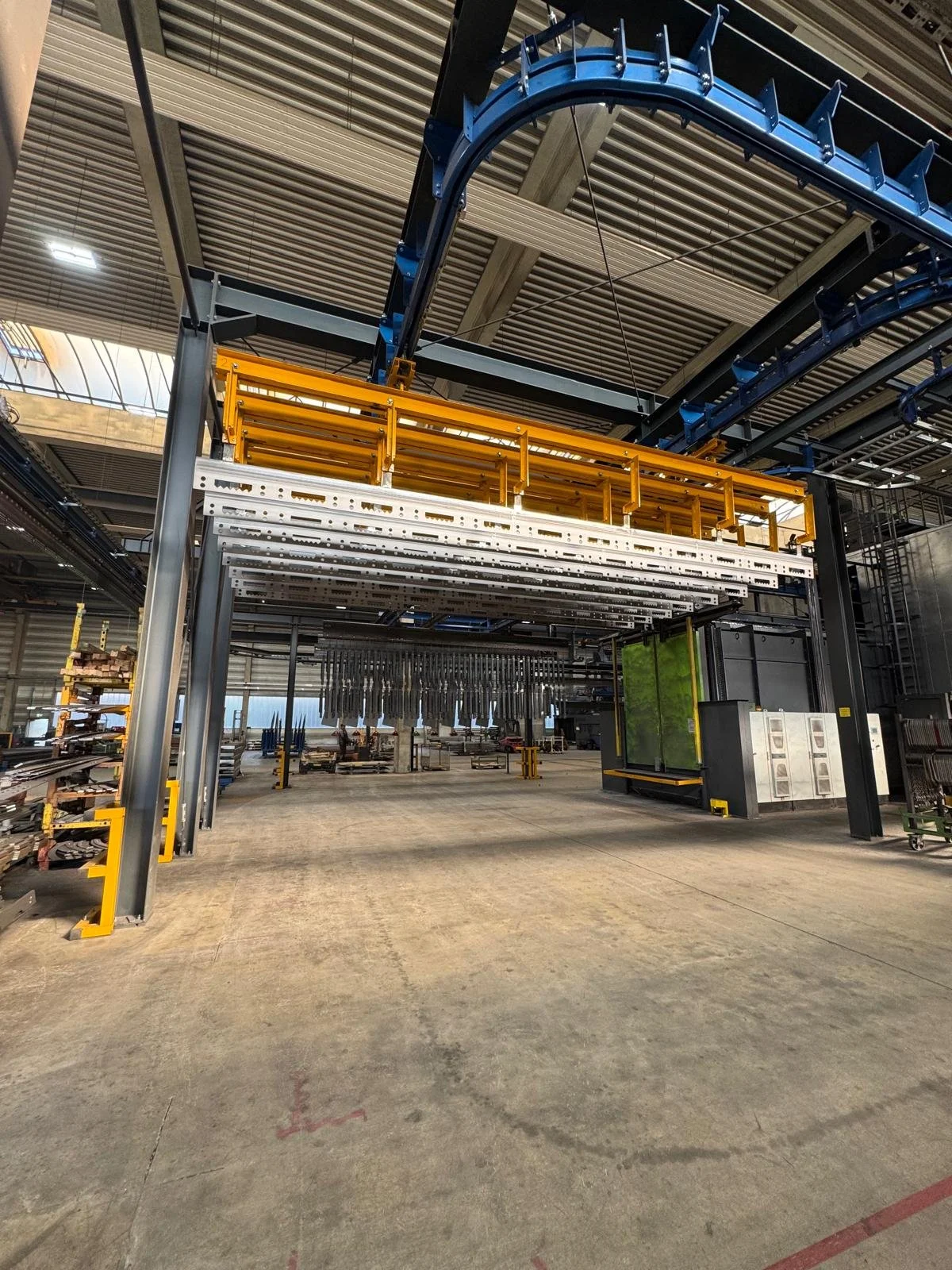
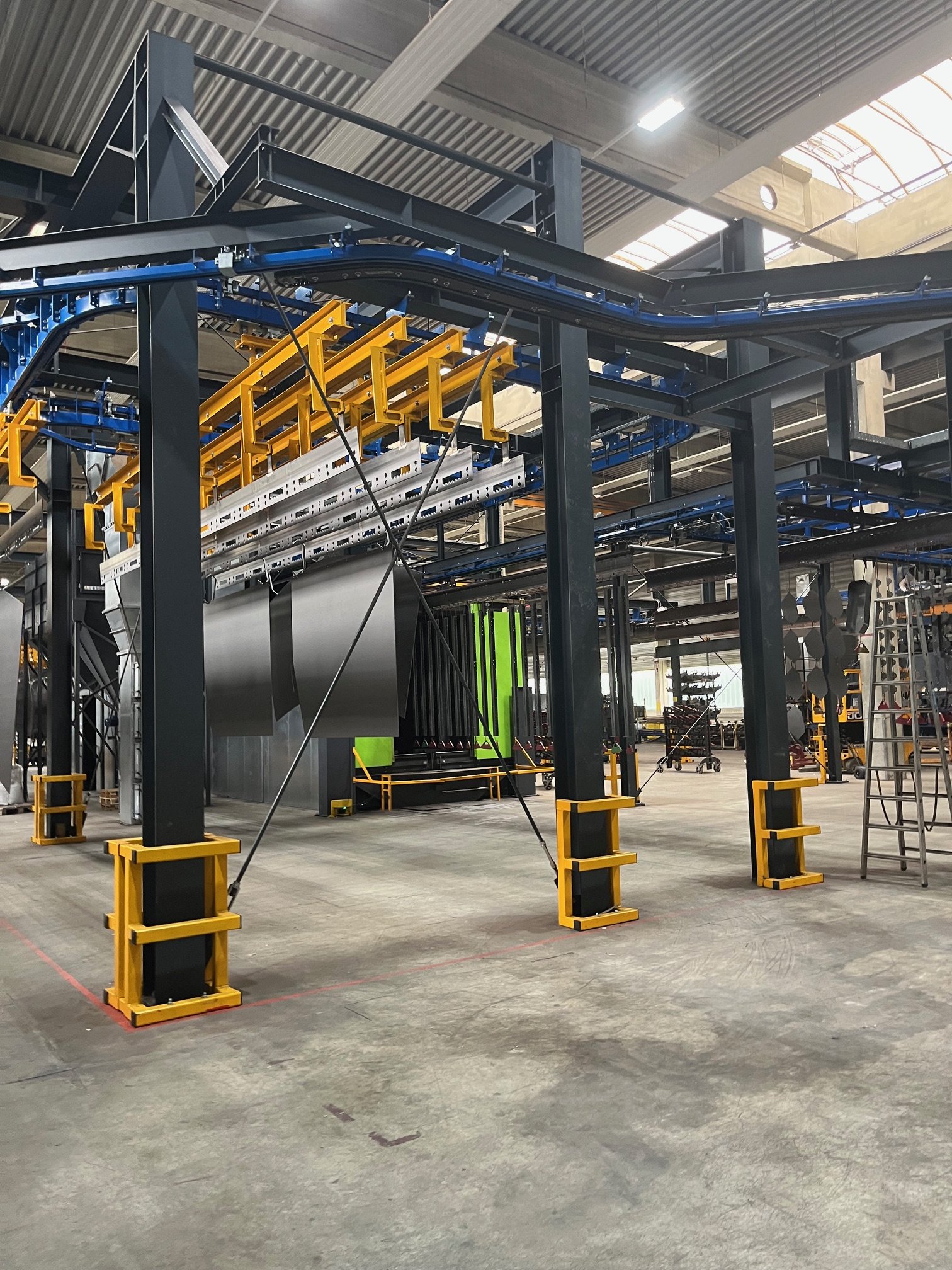
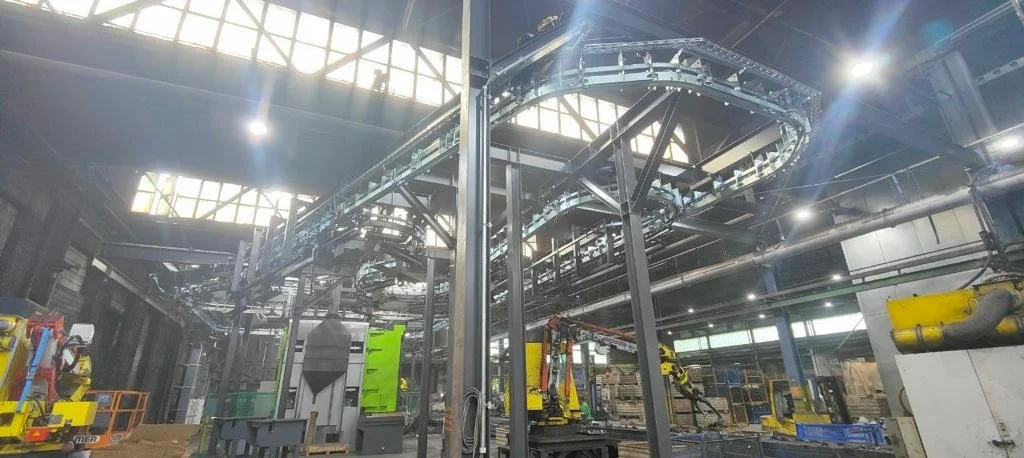
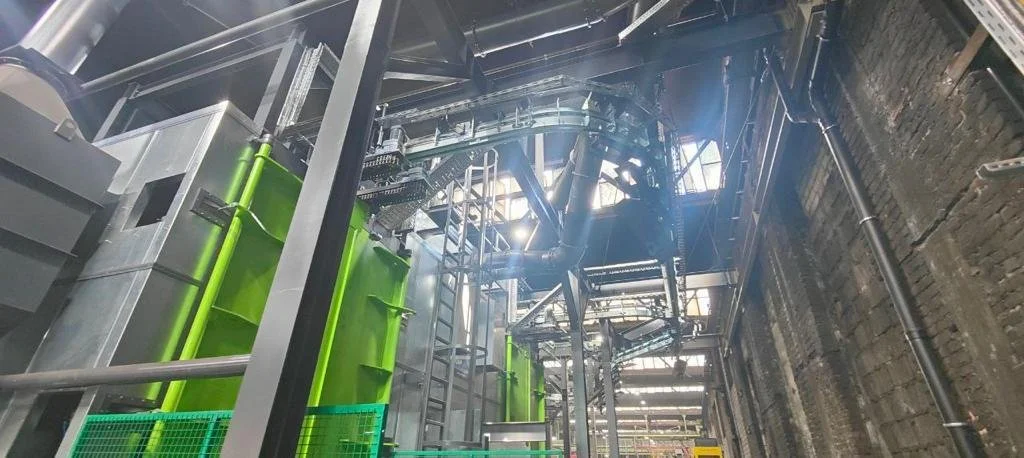
Power & Free PF70 Track Layout
-
![Power & Free PF70 Track Layout]()
Power & Free PF70 Track Layout
-
![Power & Free PF70 Powder Coating Booths]()
Power & Free PF70 Powder Coating Booths
-
![Power & Free PF70 Track Layout]()
Power & Free PF70 Track Layout
-
![Power & Free PF70 Track Layout]()
Power & Free PF70 Track Layout
-
![Power & Free PF70 Redundant Drive]()
Power & Free PF70 Redundant Drive
-
![Power & Free PF100 Accumulation Section]()
Power & Free PF100 Accumulation Section
-
![Power & Free PF100 Accumulation Section]()
Power & Free PF100 Accumulation Section
-
![Power & Free PF100 Accumulation Section]()
Power & Free PF100 Accumulation Section
-
![Power & Free PF100]()
Power & Free PF100
-
![Power & Free PF100]()
Power & Free PF100
-
![Power & Free PF100 Blasting Booth]()
Power & Free PF100 Blasting Booth
-
![Power & Free PF100 Track Layout]()
Power & Free PF100 Track Layout
-
![Power & Free PF70 Lift and Lower Station]()
Power & Free PF70 Lift and Lower Station
-
![Power & Free PF70 Empty Carrier Storage]()
Power & Free PF70 Empty Carrier Storage
-
![Power & Free PF70 Storage]()
Power & Free PF70 Storage
-
![Power & Free PF150 Lift and Lower Station]()
Power & Free PF150 Lift and Lower Station
-
![Power & Free PF150 Storage]()
Power & Free PF150 Storage
-
![Power & Free PF150 Blast Booth]()
Power & Free PF150 Blast Booth
-
![Power & Free PF150 Manipulator]()
Power & Free PF150 Manipulator
-
![Power & Free PF150 Blast Booth]()
Power & Free PF150 Blast Booth
-
![Power & Free PF150 Blast Booth]()
Power & Free PF150 Blast Booth
-
![Power & Free PF150 Reinforced Blast Booth]()
Power & Free PF150 Reinforced Blast Booth
-
![Power & Free PF150 Centering Station]()
Power & Free PF150 Centering Station
-
![Power & Free PF100 Inclined Lift and Lower Station]()
Power & Free PF100 Inclined Lift and Lower Station