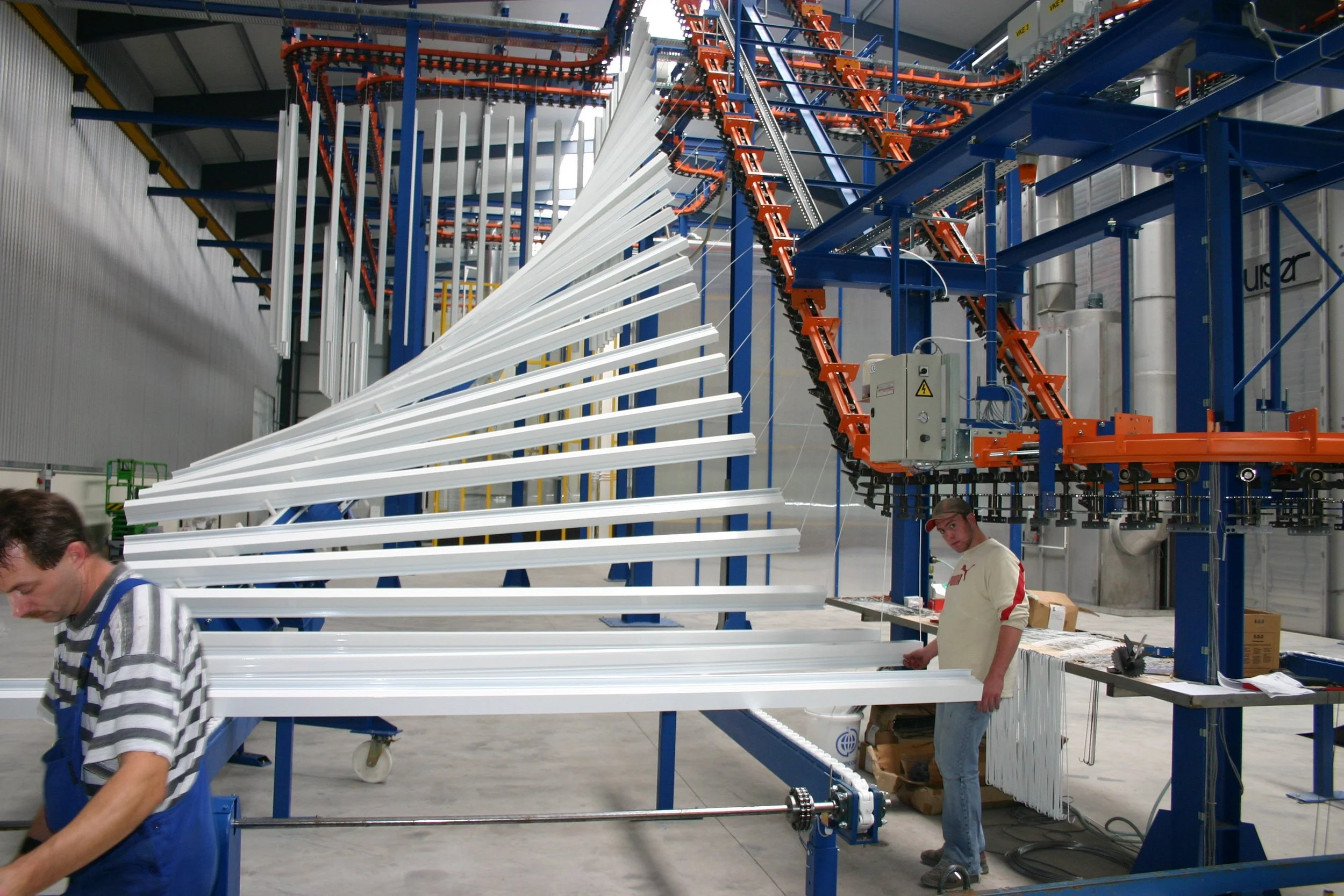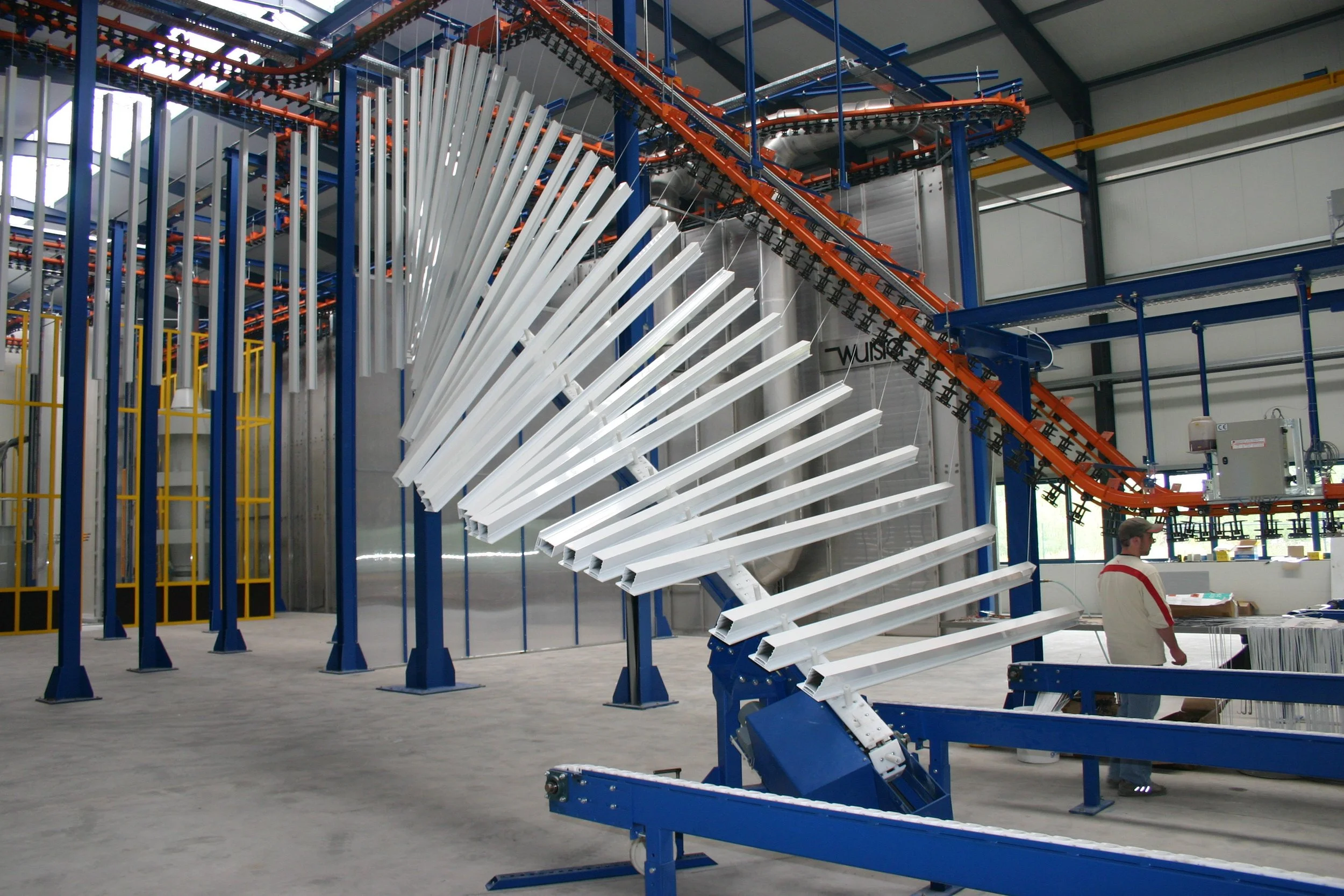
Overhead Chain Conveyors
Dynamic. Precise. Fully Automated.
Cost-Effective and Automated Overhead Conveyor Systems
Overhead conveyor systems are cost-effective, automated transport systems utilized wherever continuous or clocked material flow in larger quantities is required. Unlike manual overhead conveyors, these systems transport goods via a continuously circulating chain.
M&N overhead conveyors can be implemented as ceiling-mounted (KF) or floor-supported (BKF) systems.
For light to medium loads ranging from 1 to 100 kg, we offer high-performance, fully automated system solutions specifically engineered for rapid and efficient production processes.
They ensure maximum cycle accuracy, stability, and process reliability, and can be individually expanded with:
Rotating carriers for optimal component orientation
Transfer stations for seamless process integration
The result: maximum automation, stable processes, and peak efficiency — even under the most demanding production requirements.
System Overview
A circular conveyor, also known as a recirculating conveyor, loop conveyor, or circular conveyor, is a continuous conveying system that moves goods in a closed loop.
- Production Lines
- Assembly Areas
- Storage and Picking Systems
- Packaging Lines
- Production Lines
System Components
An overhead conveyor system typically consists of the following components:
- an endless conveying medium such as a chain, belt, or pusher conveyor
- Guiding and drive stations
- Roller or slide rails
- Carriers, transport trolleys, or product carriers
- Control and safety technology
Functionality of the Overhead Conveyor System
The conveyed material moves continuously through transfer and drive stations. Depending on the system, load carriers may be integrated in different ways.
- Load carriers are directly affixed to the conveying medium
- Load carriers are propelled by drivers
- Load carriers are suspended in hangers and are pulled along
Typical Functions
- Constant or adjustable transport flow
- Continuous material flow
- Feeding or discharge at various stations
- Buffering via circulation
- Integration into automated processes
Automatic Operation
In automatic mode, the system performs all movements according to the program settings. This mode is designed for continuous operation without manual intervention.
- Software-based monitoring
- Position and speed controls
- Sensor technology for jam and fault monitoring
- Interlocks with connected systems
Manual Operation / Jog Mode
Manual operation is primarily utilized for service and intervention scenarios.
- Maintenance
- Troubleshooting
- Manual positioning of the conveying medium
- Movements are executed by continuous button press, i.e., in jog mode
- All hardware-based safety features remain active.
- Software-based monitoring may be reduced.
- Manual operation is restricted to trained operating personnel.
Safety Instructions
The following fundamental rules apply to the safe operation of the circular conveyor system:
- No personnel are permitted within the hazard zone of the conveying medium.
- Reaching into moving system components is prohibited.
- Dangling clothing, jewelry, or long hair must be secured.
- The maximum load capacity of the load carriers must not be exceeded.
- Operation is prohibited if covers or safety guards have been removed.
- Loads must not slip, tip, or fall.
- Immediately stop the system.
- Identify the cause.
- Only restart after rectifying the malfunction.
Commissioning
- Perform a visual inspection of the system.
- Reset the emergency stop switch.
- Power on the control system.
- Select operating mode: Automatic or Manual.
- Verify safety clearances.
- Issue the start command.
Circulating Operation
During operation, the conveying medium moves uniformly in a circular path.
- Conveyed goods are loaded or unloaded at various stations.
- Jams are automatically detected, provided a jam monitoring system is installed.
- The operator must continuously monitor the conveying area.
System Shutdown
- Allow the system to coast to a stop in automatic mode.
- Press the stop button.
- Shut down the control system.
- Disconnect the power supply, especially during extended downtimes.
Special Notes
- Circular conveyor systems are continuous conveyors. Reverse movements are generally not intended and are only permissible for service purposes.
- Hazards arise particularly in curves, deflection stations, and pinch points. Increased vigilance is required in these areas.
- Safety clearances must be maintained at input and output points.
- Prior to opening for maintenance, all energy sources—electrical, pneumatic, and mechanical—must be disconnected.
Maintenance and Inspection
Maintenance ensures safe and trouble-free operation and specifically comprises:
- Inspection of the conveyor chain, belts, or flights.
- Lubrication of chains, rollers, or bearings, depending on the system.
- Inspection of the deflection and drive station.
- Verification of sensors and limit switches.
- Cleaning of the conveying path.
- Verification of all safety devices.
- Checking the tension of the conveying medium.
Technical Note
Maintenance must only be performed by qualified technical personnel.
System Overview
A circular conveyor, also known as a recirculating conveyor, loop conveyor, or circular conveyor, is a continuous conveying system that moves goods in a closed loop.
- Production Lines
- Assembly Areas
- Storage and Picking Systems
- Packaging Lines
- Production Lines
System Components
- Continuous conveying medium such as chain, belt, or flighted belt.
- Guiding and drive stations
- Roller or slide rails
- Flights, transport carriers, or product carriers.
- Control and safety technology.
Operating Principle
- The conveying medium operates continuously over deflection and drive stations.
- Load carriers can be directly attached, conveyed, or suspended.
- Input and output operations are possible at various stations
- Buffering via circulation
- Integration into automated processes
Automatic Operation
- Program-controlled movements
- Position and speed controls
- Jam and fault monitoring
- Interlocks with connected systems
Manual Operation / Jog Mode
- For maintenance and fault rectification
- For manual positioning of the conveyed material
- Movement only while pressed
- For trained operating personnel only
Safety Instructions
- No personnel within the danger zone of the conveyed material
- Do not reach into moving system components
- Secure clothing, jewelry, and hair
- Adhere to the maximum load capacity of the load carriers
- Never operate without safety guards or covers
- Stop immediately in case of malfunctions
Commissioning
- Perform Visual Inspection
- Reset the emergency stop
- Power on the control system.
- Select Operating Mode
- Verify safety clearances.
- Issue the start command.
Circulating Operation
- The conveyed material moves uniformly in a circular path
- Loading and unloading at various stations
- Jam monitoring, depending on configuration
- Always monitor the transport area
Switch off
- Allow the system to coast to a stop
- Press the stop button.
- Shut down the control system.
- Disconnect the power supply
Special Notes
- Reverse movements are generally not intended
- Exercise heightened awareness in curves, deflection stations, and constricted areas
- Maintain safety clearances at input and output points
- Disconnect all energy sources before maintenance work.
Maintenance and Inspection
- Inspection of conveyor chain, belts, and carriers.
- Lubrication of chains, rollers, or bearings.
- Inspection of the deflection and drive station.
- Check sensors and limit switches.
- Clean the conveyor path.
- Inspect safety devices.
- Check the tension of the conveying medium.
Maintenance must only be performed by qualified technical personnel.
-
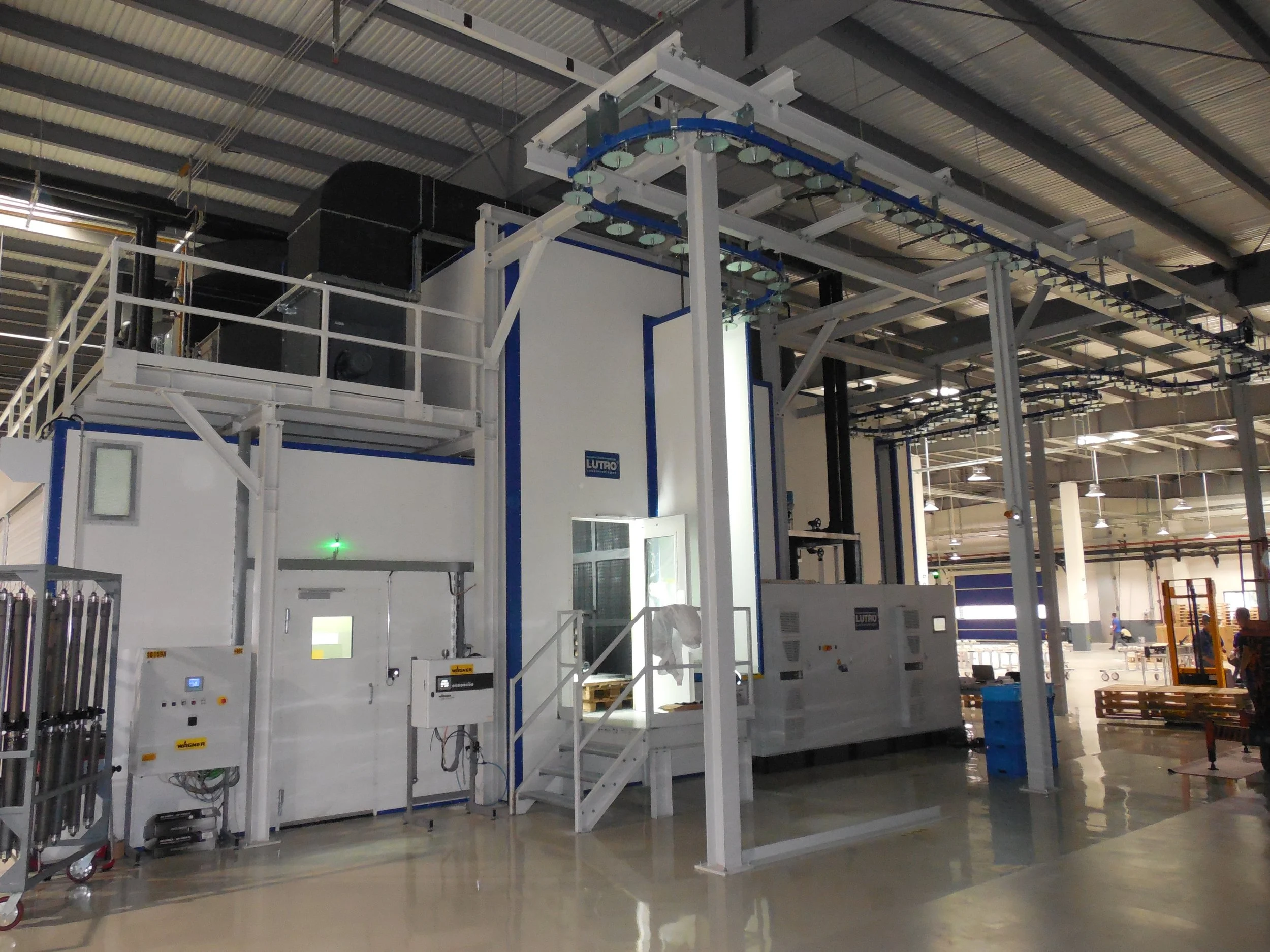
![Circular Conveyor KF70 Paint Booth]()
Circular Conveyor KF70 Paint Booth
-
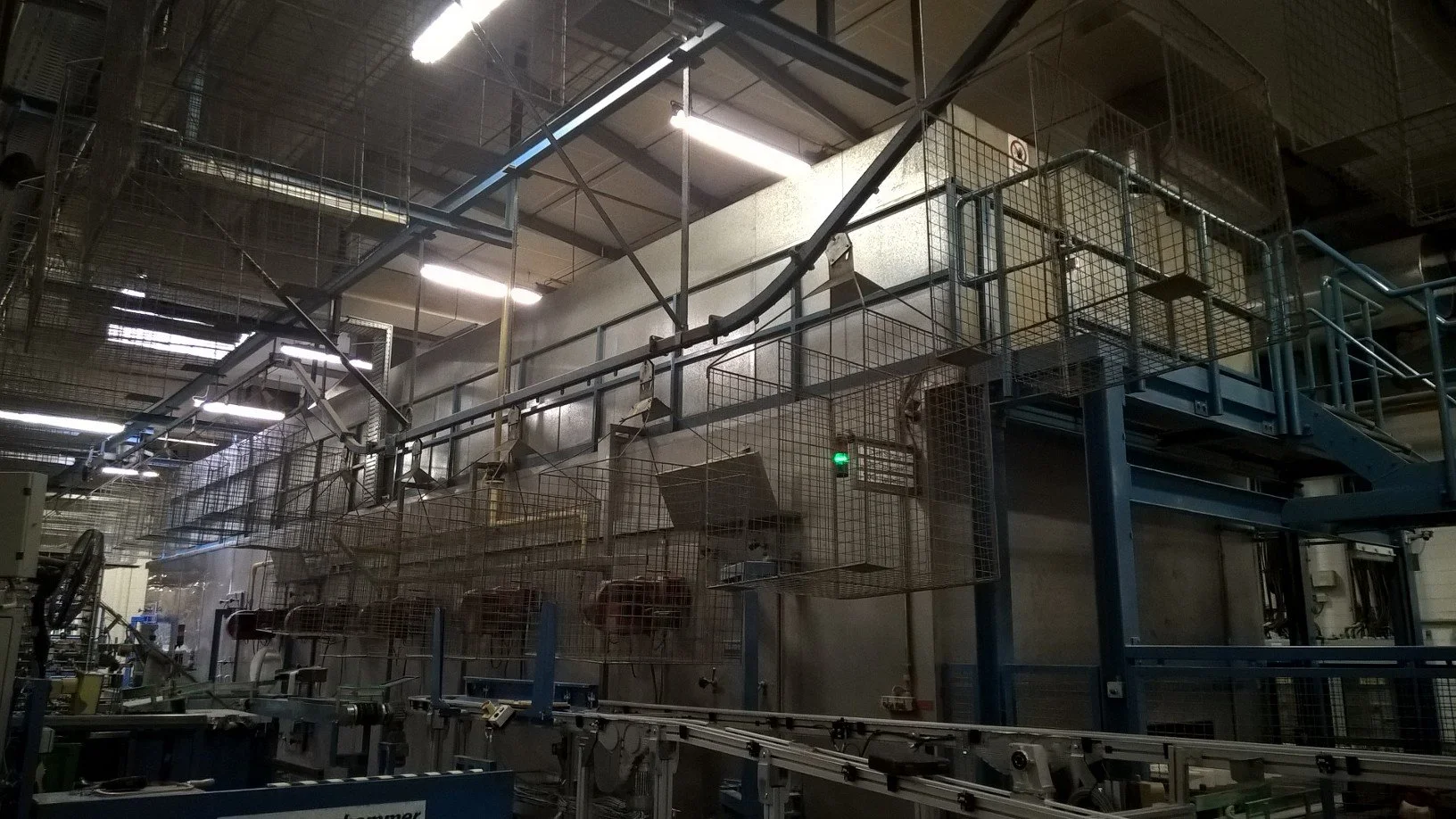
![Circular Conveyor KF70 Pre-treatment]()
Circular Conveyor KF70 Pre-treatment
-
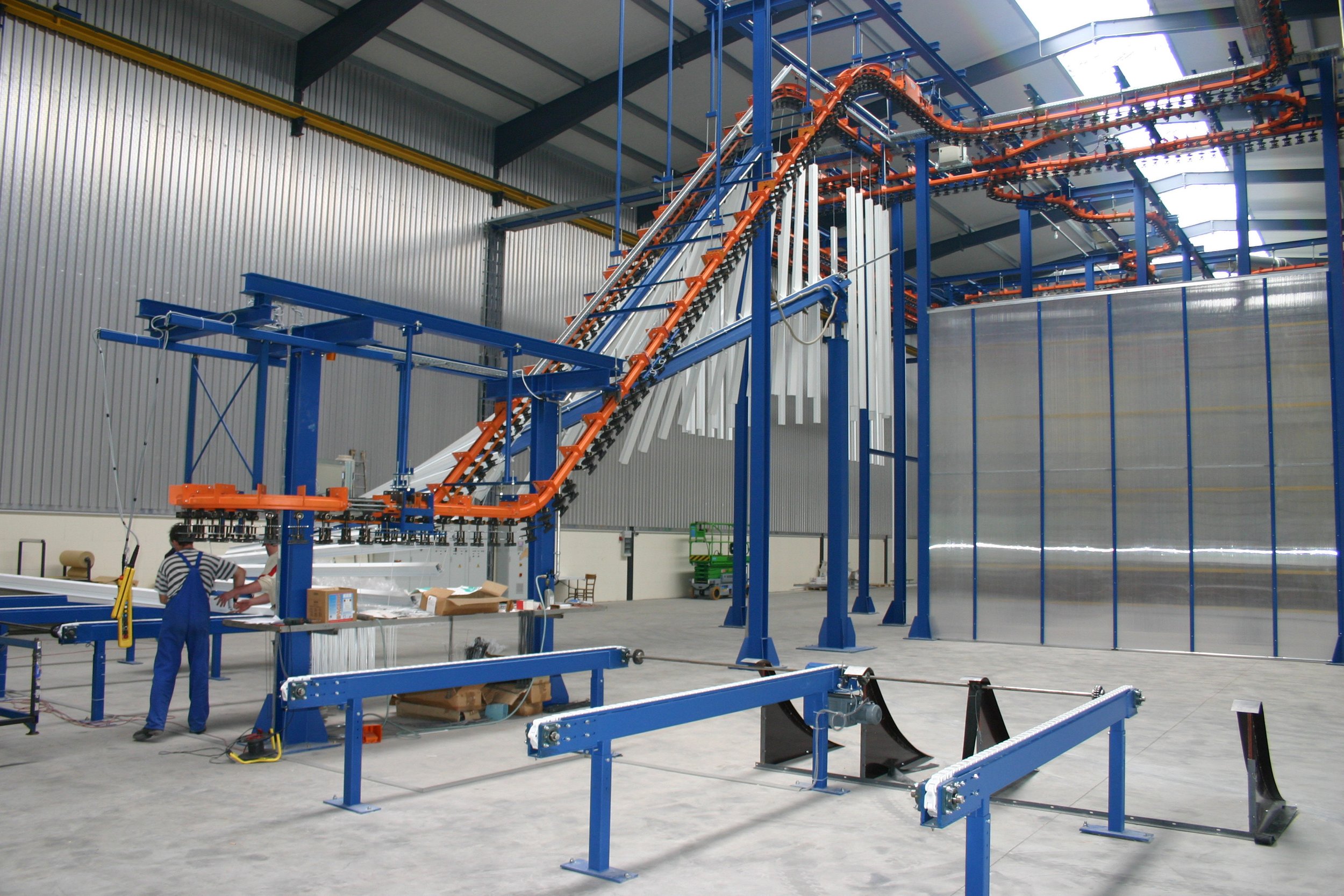
![Circular Conveyor Loading Station]()
Circular Conveyor Loading Station
-
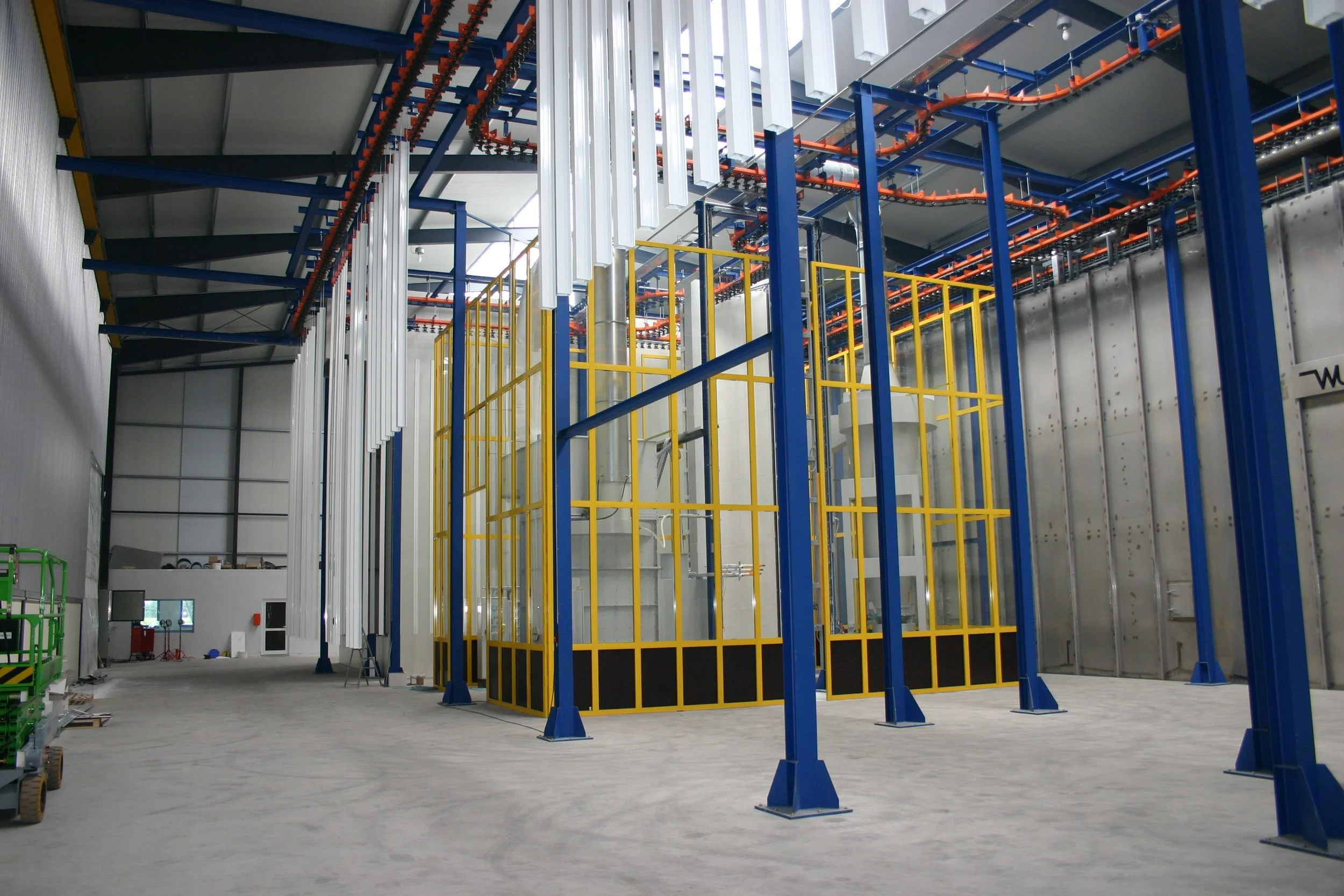
![Circular Conveyor Powder Coating Booth]()
Circular Conveyor Powder Coating Booth
-
![Circular Conveyor Powder Coating Booth]()
Circular Conveyor Powder Coating Booth
-
![Circular Conveyor Unloading Station]()
Circular Conveyor Unloading Station